Styles · Mid-century
Walnut, curves and earthy colour, made to measure
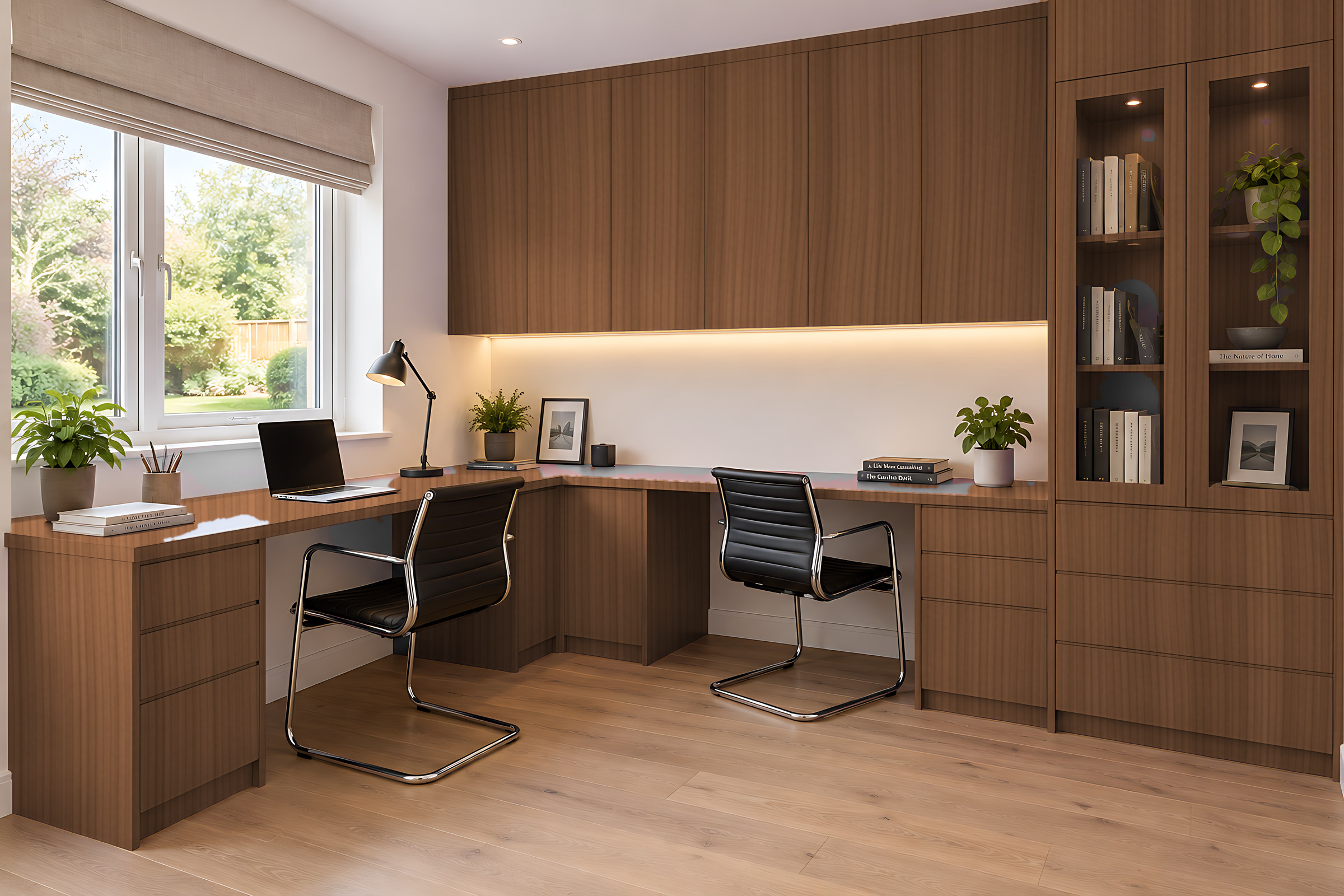
Borrowed from the furniture of the 1950s and 60s: warm wood, soft corners and colours from the garden. It suits a living room particularly well, and a kitchen surprisingly so.
What defines it
Six details that say mid-century
-
Warm, figured wood
Walnut or vintage teak, with a lively grain you can see from across the room.
-
Curved ends
Rounded end panels and shelf profiles that soften a run and make it kinder to walk past.
-
Tapered-look details
Slim, angled profiles and a set-back plinth, so units look lighter on their feet. The exact details are drawn and confirmed on your design.
-
Slim handles
Fine edge pulls or a slender bar, never chunky. Brushed brass suits the warmth of the wood.
-
Earthy colour
Olive and terracotta clay beside the wood, used in blocks: a run of drawers, an island, the back of a shelf.
-
Low and long
Horizontal lines throughout, with long sideboard-style units and wide drawers. Tall clutter, cables and chargers stay inside.
Where timber takes the lead
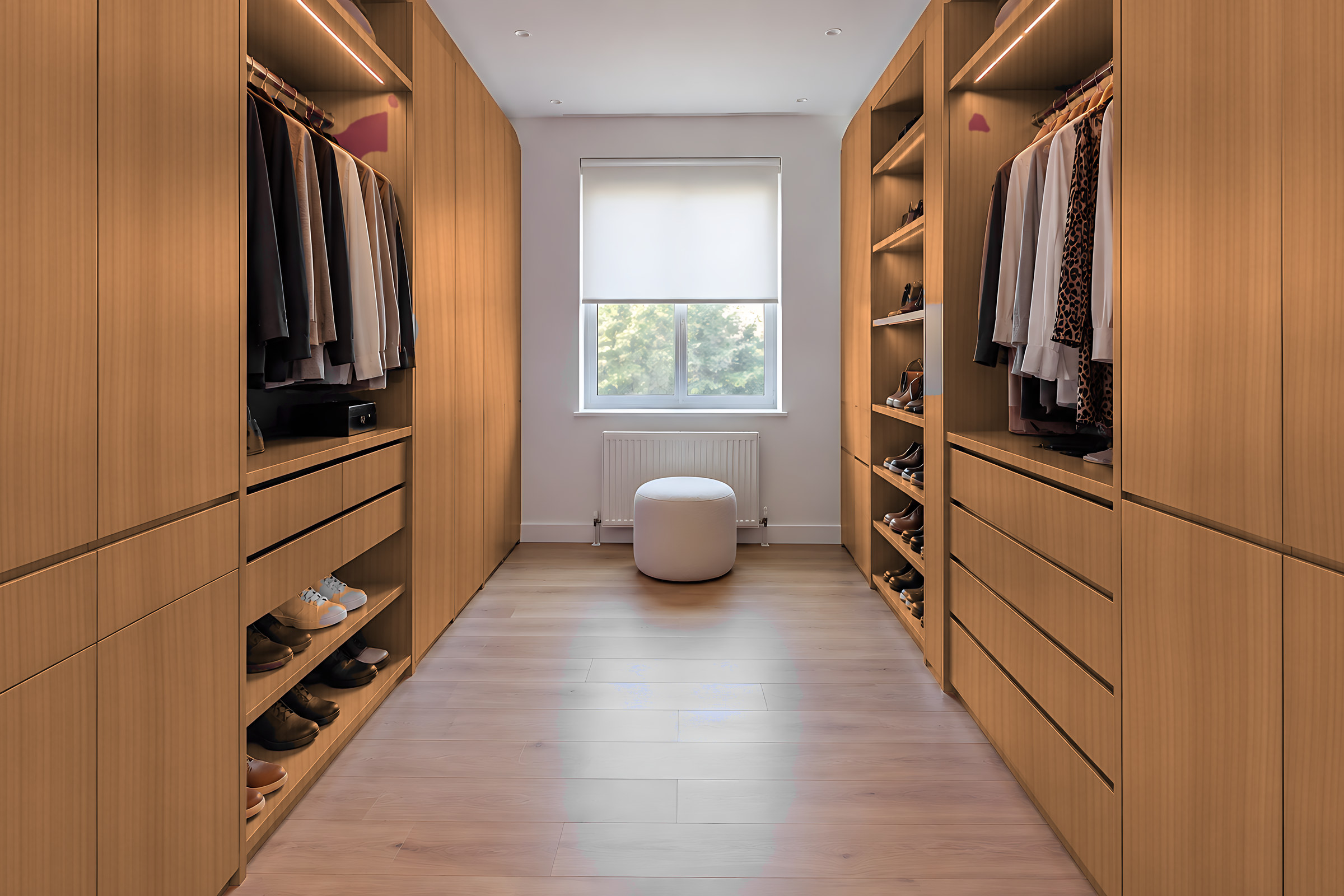
A dressing room in vintage teak, with golden grain, slim pulls and lit shelving. Wardrobes in this style read as a piece of furniture rather than a wall of doors.
From the kitchen to the living room
Wood does the heavy lifting. Colour fills the gaps.
Kitchens
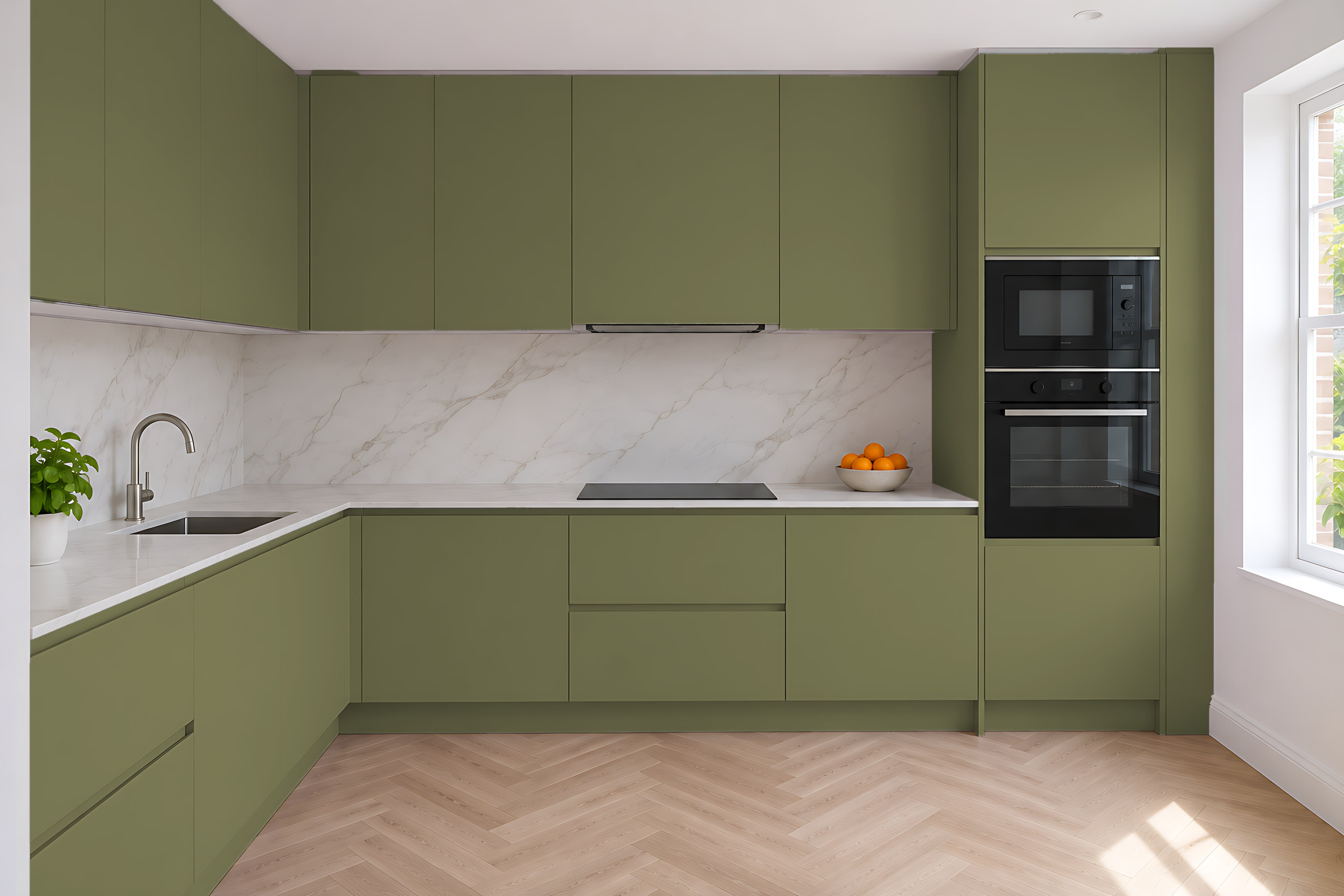
Olive doors, walnut shelves
Olive base units with a walnut open shelf or two and a soft white worktop. The hint of brown in the green is what makes it sit so well with the wood. See kitchens.
Smaller kitchens
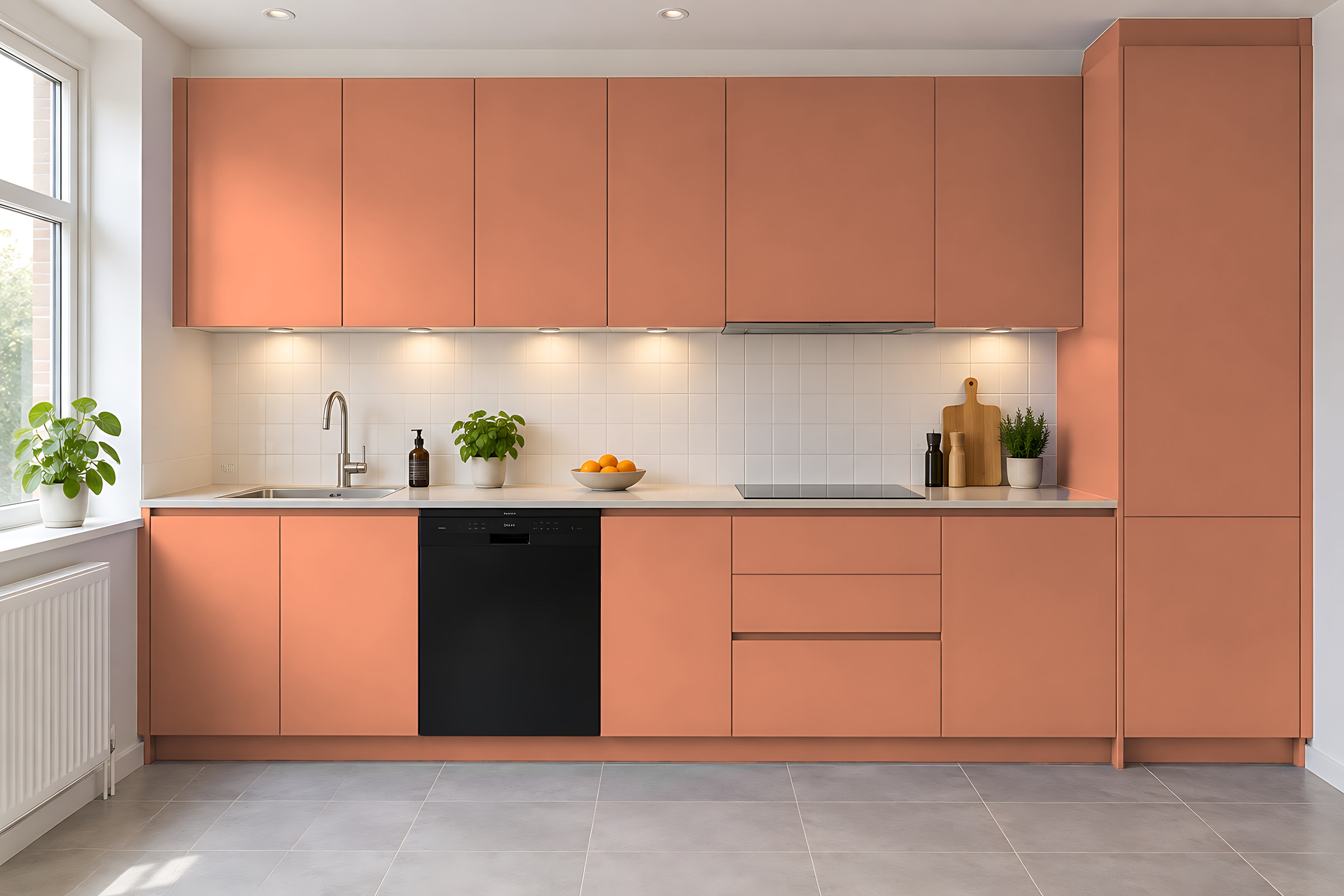
One wall of terracotta
In a galley or single-wall kitchen, terracotta clay brings sunshine without needing much space. Teak or walnut on the shelves keeps it grounded. More ideas in small kitchen storage.
Living rooms
The sideboard, grown up
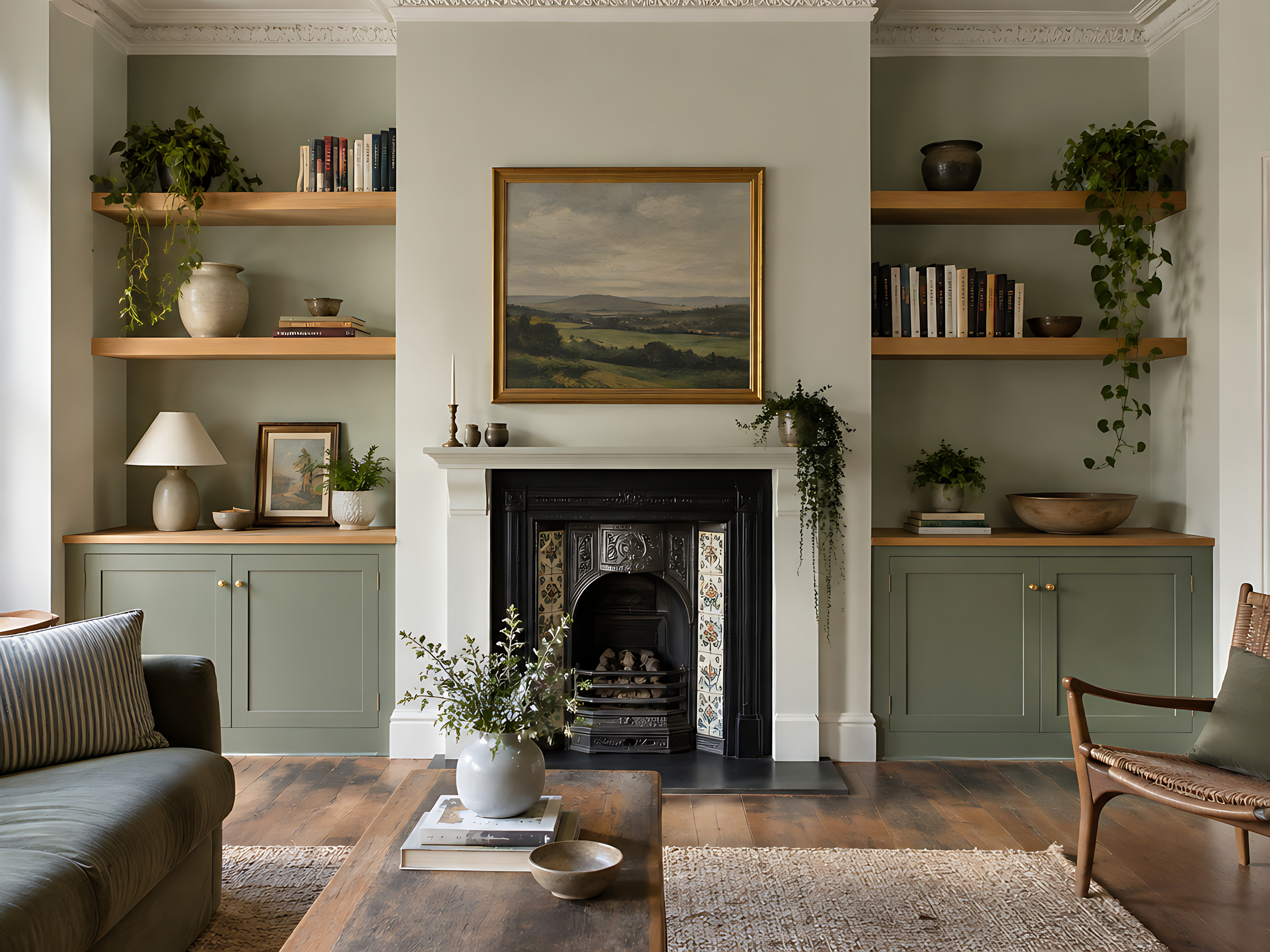
A long, low walnut unit with push-to-open drawers, a lit shelf above and a curved end where it meets the window. In a room with a chimney breast, the same piece can be cut to fit each alcove. Ideas for both in alcove units and media walls.
Two woods, two colours
Pick a wood first, then decide whether olive or clay is your accent.
- Walnut Deep chocolate brown with a lively grain. Good for: Kitchen, Bedroom or dressing room, Living room or media wall, Home office About walnutTry it in the planner
- Vintage teak Golden-brown with a mid-century feel. Good for: Living room or media wall, Home office About vintage teakTry it in the planner
- Olive A deep, earthy green with a little brown in it. Rich next to walnut. Good for: Kitchen, Living room or media wall, Utility or boot room About oliveTry it in the planner
- Terracotta clay A sun-baked orange-brown. Warm and characterful. Good for: Kitchen, Children's room, Utility or boot room About terracotta clayTry it in the planner
Olive and terracotta clay are painted finishes. Walnut and vintage teak are woodgrains with matching edges.
Make it yours
Making mid-century work today
In a family home
Keep the walnut for the places that see fewer sticky fingers: wall units, shelves, the living room. Olive on the lower kitchen doors is practical and still on theme. Rounded ends are kinder to small heads at table height, too.
In a small room
Dark wood can close a small room in. Choose teak over walnut, keep the units low and leave the wall above them clear or pale. A curved end on a short run stops it feeling boxed in. Corners get their own page in awkward corners.
In a period house in the North East
Post-war semis take this look naturally. In a Victorian or Edwardian terrace, use it for alcove units and a media wall, and let the original fireplace or bay set the proportions. Old walls are rarely true, so every run is scribed to fit.
Fancy a bit of walnut?
Send a photo of the room. We'll send a mid-century design and a price range, free, with samples of the woods if you'd like them.
Free guide
Get the free planning guide
Measuring, styles, finishes and how to plan your budget, in one short guide. Then the odd email with ideas worth stealing.
Questions people ask
Anything else, send us a message and we'll talk it through.
Is the walnut real wood?
It's a woodgrain finish with a real grain texture, matched on every edge. That keeps the colour consistent from one door to the next.
Can you make curved shelves and end panels?
Yes. Curved end panels and shelf profiles are part of the range, and they're drawn on your design so you can see exactly where they go.
What worktop suits a mid-century kitchen?
A soft white quartz keeps the look light. Solid oak adds even more warmth but needs occasional oiling. Either is templated and fitted locally once the units are in.
Which handles go with mid-century style?
Slim edge pulls or slim bar handles. Brushed brass is the classic match for walnut and teak; matt black feels a little more modern.