Glass, shelves and light
Show the good things off, and light them softly
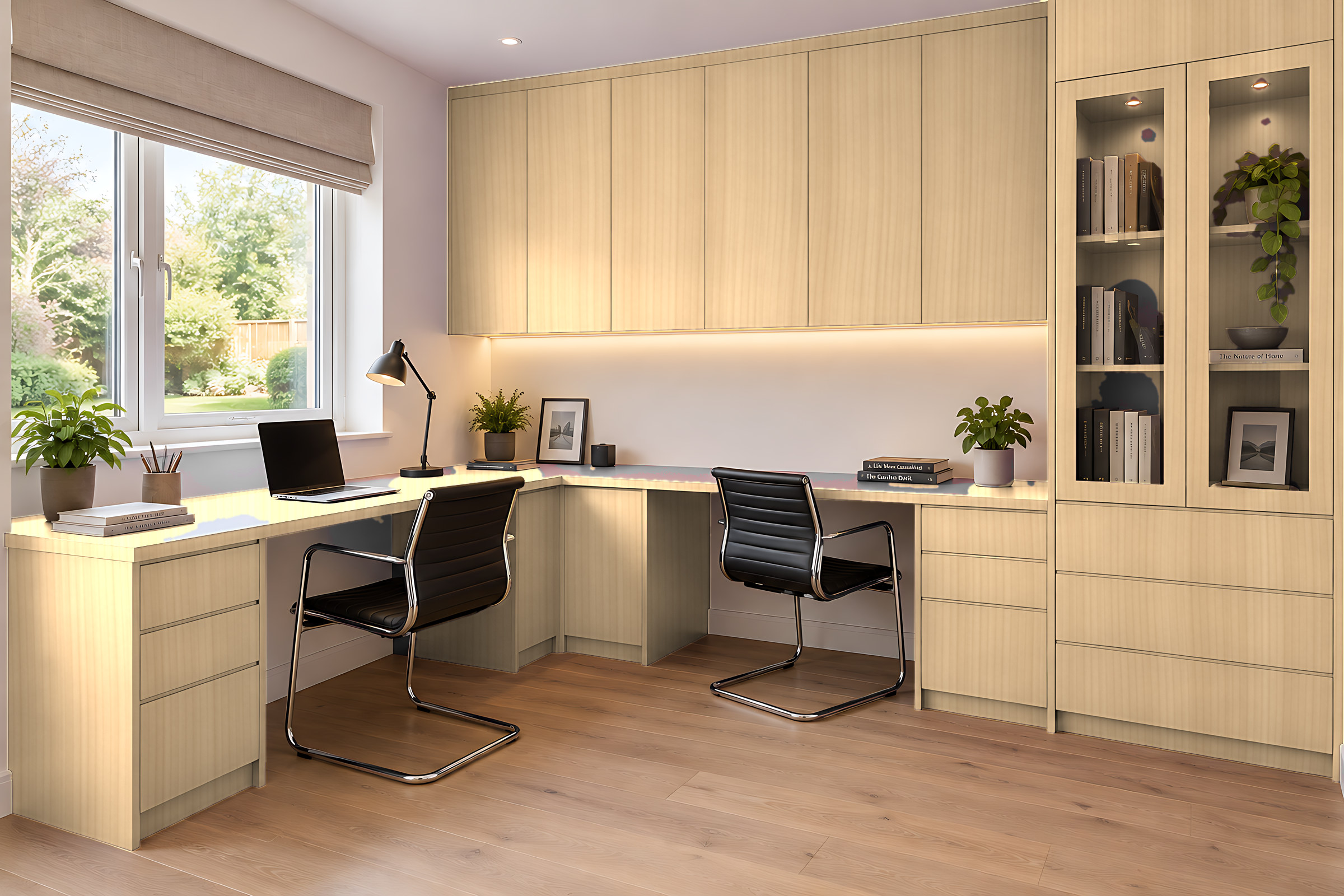
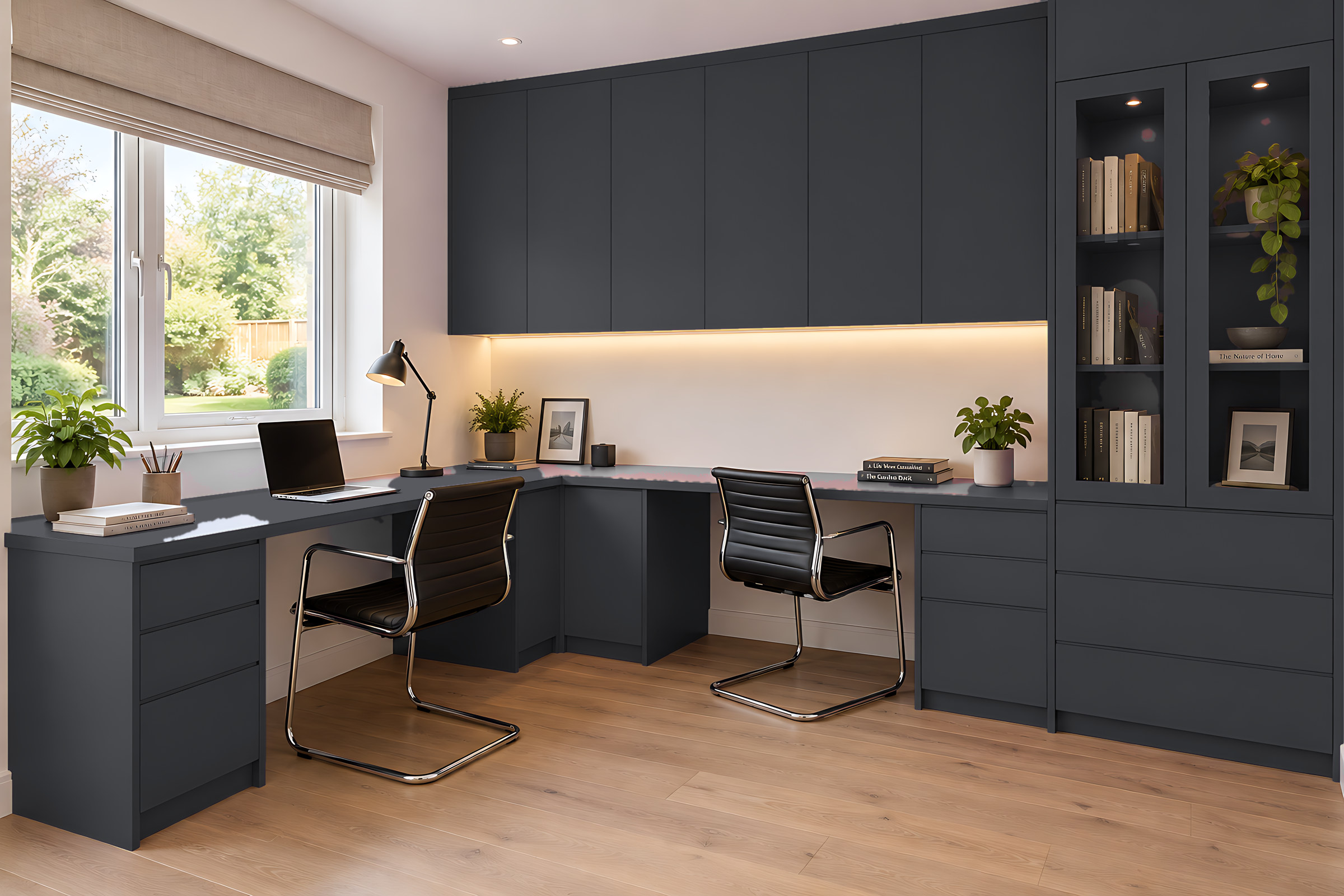
A glazed tower for the glassware, open shelves for the books, a warm glow along the plinth at night. All planned on the drawing, so the wiring is ready before the furniture arrives.
Glass or open?
Should it have a door at all?
Open shelving is friendly and easy. Everything is within reach, and a few books or plants make a run of cupboards feel lived in. It also gathers dust, so it suits the things you use often.
A framed glass door is the middle ground. You still see what's inside, but it stays clean, and a slim aluminium frame keeps the look light. Clear glass gives a crisp display. Grey glass softens whatever sits behind it.
Three ways to bring light into the furniture
Glass, open bays and the floor itself. Most rooms need only one or two.
Display
Glazed towers and wall units
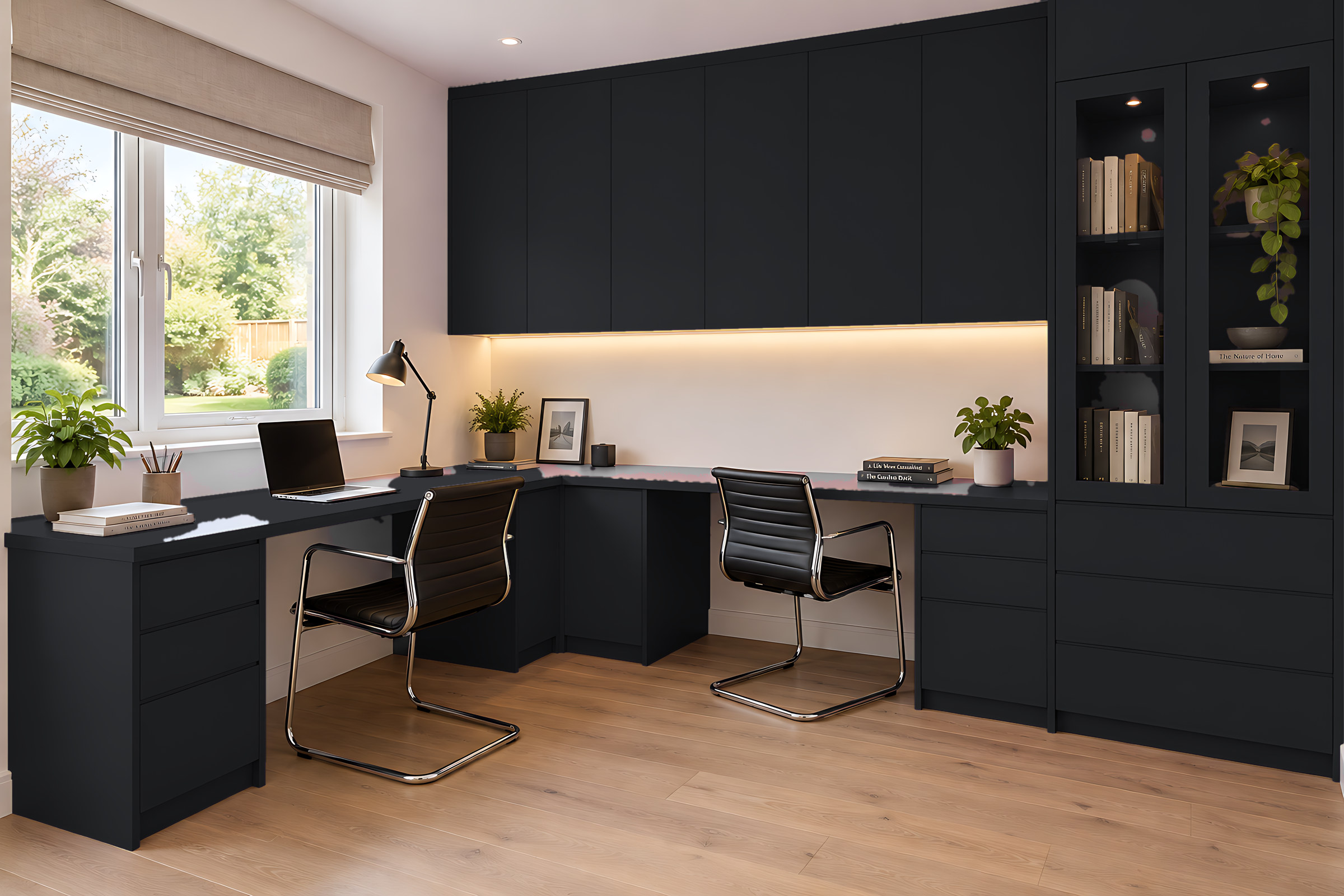
A tall glass door at the end of a run, or a pair of glazed wall units over a dry bar. Light them from inside and glassware glows.
Open
Open bays and lit shelves
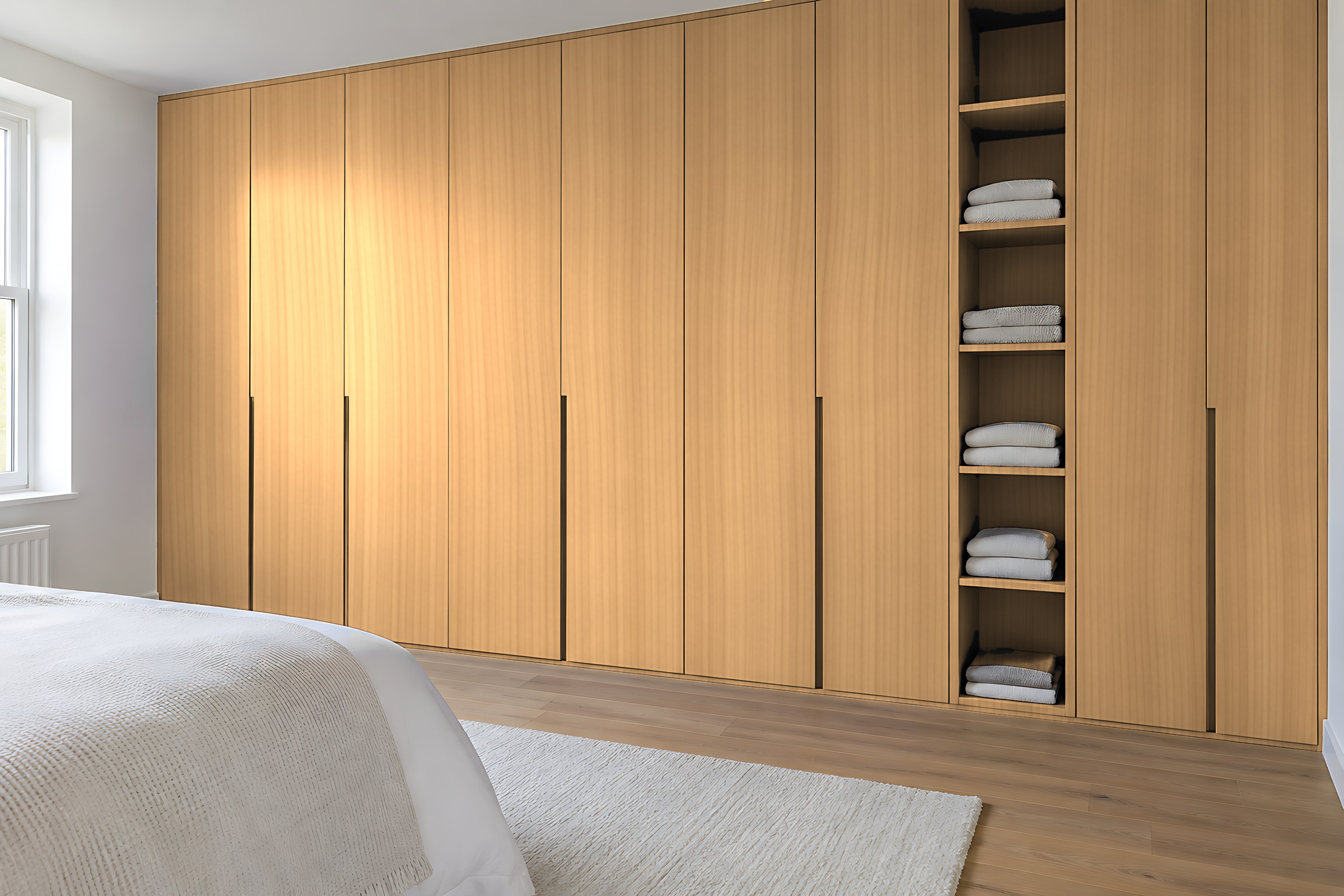
An open bay breaks up a long wall of doors. A slim LED strip under each shelf turns it into a display after dark.
-
Shelf spacing set to your books or baskets
-
Edges banded to match
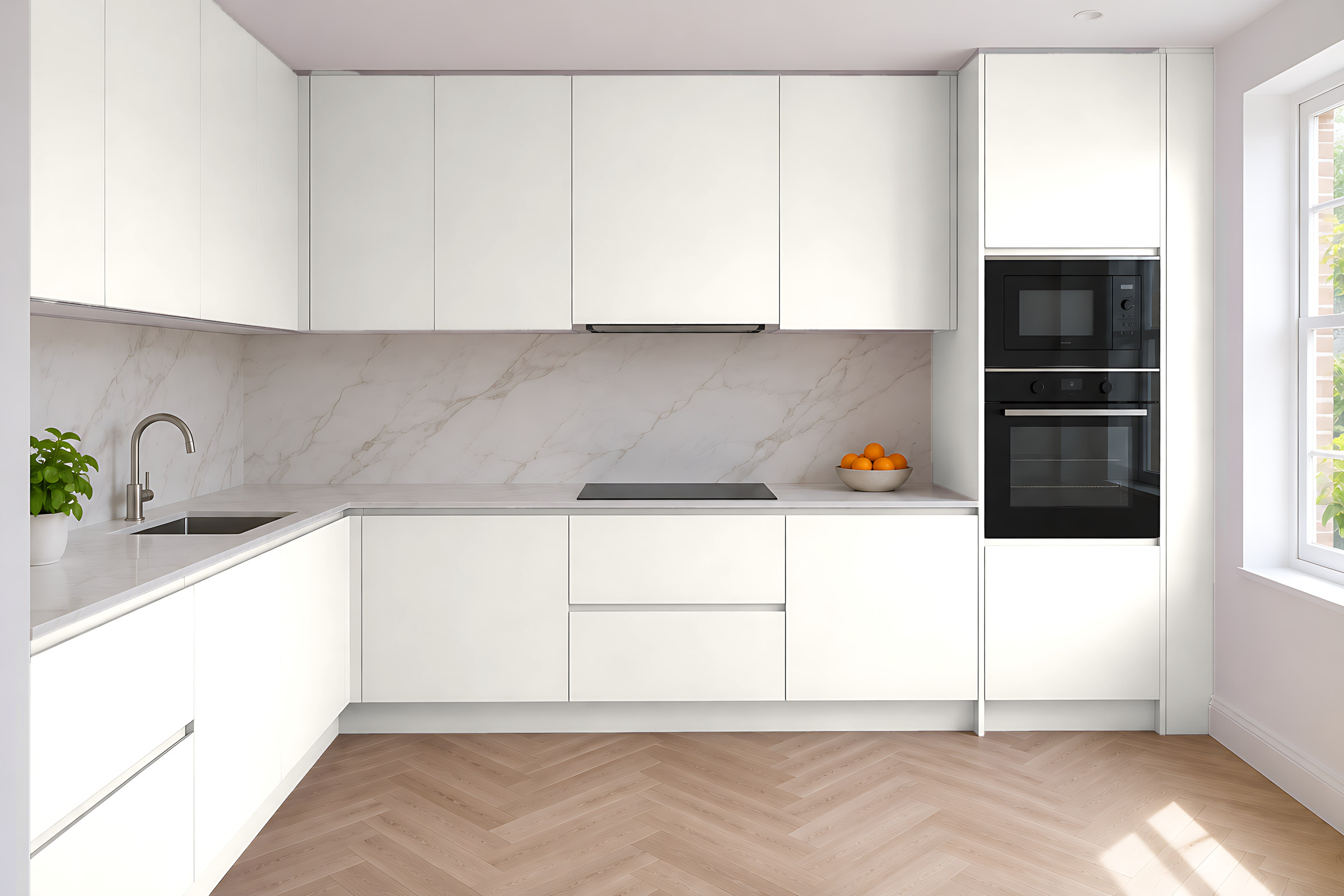
Floor
Plinth lights
An aluminium plinth with an LED strip washes light across the floor. Handy for a late glass of water, and it makes the units look as if they float.
The lighting, in plain terms
What can be built in, and how it's switched.
- Light colour
- Warm white, for a soft, homely glow rather than a cold blue light.
- Shelves and cabinets
- Slim LED strips set into shelves and cabinet interiors.
- Hand-wave sensor
- Pass a hand in front of it to switch the light on or off. No switch to hunt for.
- Door sensor
- Lights that come on as a wardrobe or cupboard door opens and go off when it closes.
- Plinths
- Aluminium plinths with LED strips, for a low glow along the floor.
- Connection
- By a qualified electrician. We mark every LED and the power it needs on your drawings.
Lighting is planned at the design stage, so cable routes are drawn into the furniture from the start.
Where a little light goes a long way
-
Inside wardrobes
Light that meets you as the door opens, so navy and black are easy to tell apart.
-
Under wall units
Light on the worktop where you chop, not just on the ceiling.
-
Around the TV
A soft backlight around a recess, easy on the eyes in a dark room.
-
Library shelves
A strip under each shelf, and the books become the feature.
-
Home offices
A lit display tower gives a video-call backdrop some warmth.
-
Hallways and boot rooms
A plinth light for coming home late without waking the house.
What your electrician will need
We design the furniture. A qualified electrician makes the connections. To keep that simple, you'll have:
-
A drawing with every LED strip, sensor and power point marked
-
The position where each supply should come through the wall, ready for first fix
-
A note of which lights are on hand-wave sensors and which on door sensors
-
A plan for where the LED power supplies sit, so they can be reached later
-
The order of work: wiring before the furniture goes up, final connection after
Free, posted to you
Check your finish under warm light
Order up to five free samples. Look at them under your own lamps in the evening as well as by day, because warm light changes how a colour reads.
Plan the lighting with the furniture, not after it
Send us your room. We'll mark the lighting on a free design and send a price range.
Free guide
Get the free planning guide
Measuring, styles, finishes and how to plan your budget, in one short guide. Then the odd email with ideas worth stealing.
Questions people ask
Anything else, send us a message and we'll talk it through.
Do you fit the lighting?
The LED strips, sensors and plinths are built into the furniture. The connection to your mains must be made by a qualified electrician, and we give them a marked-up drawing so they know exactly what goes where.
What's a hand-wave sensor?
A small sensor, usually set into a shelf or under a cabinet, that switches the light on or off when you pass a hand in front of it. Useful when your hands are full.
Clear or grey glass?
Clear glass shows everything crisply and suits a tidy collection. Grey glass softens what's behind it, which is kinder to a shelf of mismatched mugs.
Is open shelving practical in a kitchen?
In small doses. A short run near the hob or sink for everyday cups and oils gets used and stays clean. Long runs of open shelves collect dust and cooking grease, so glass doors are often the better choice there.
Can I add lighting later?
It's much easier to plan it now. Cable routes and sensor positions are built into the panels, and adding them afterwards can leave wires on show. If you're unsure, mention it at the design stage and we'll talk it through.