Colour: green
Green that suits the light you actually get
Sage, olive and forest green look very different at nine in the morning and nine at night. Here's how to choose one for your room rather than for a screen.
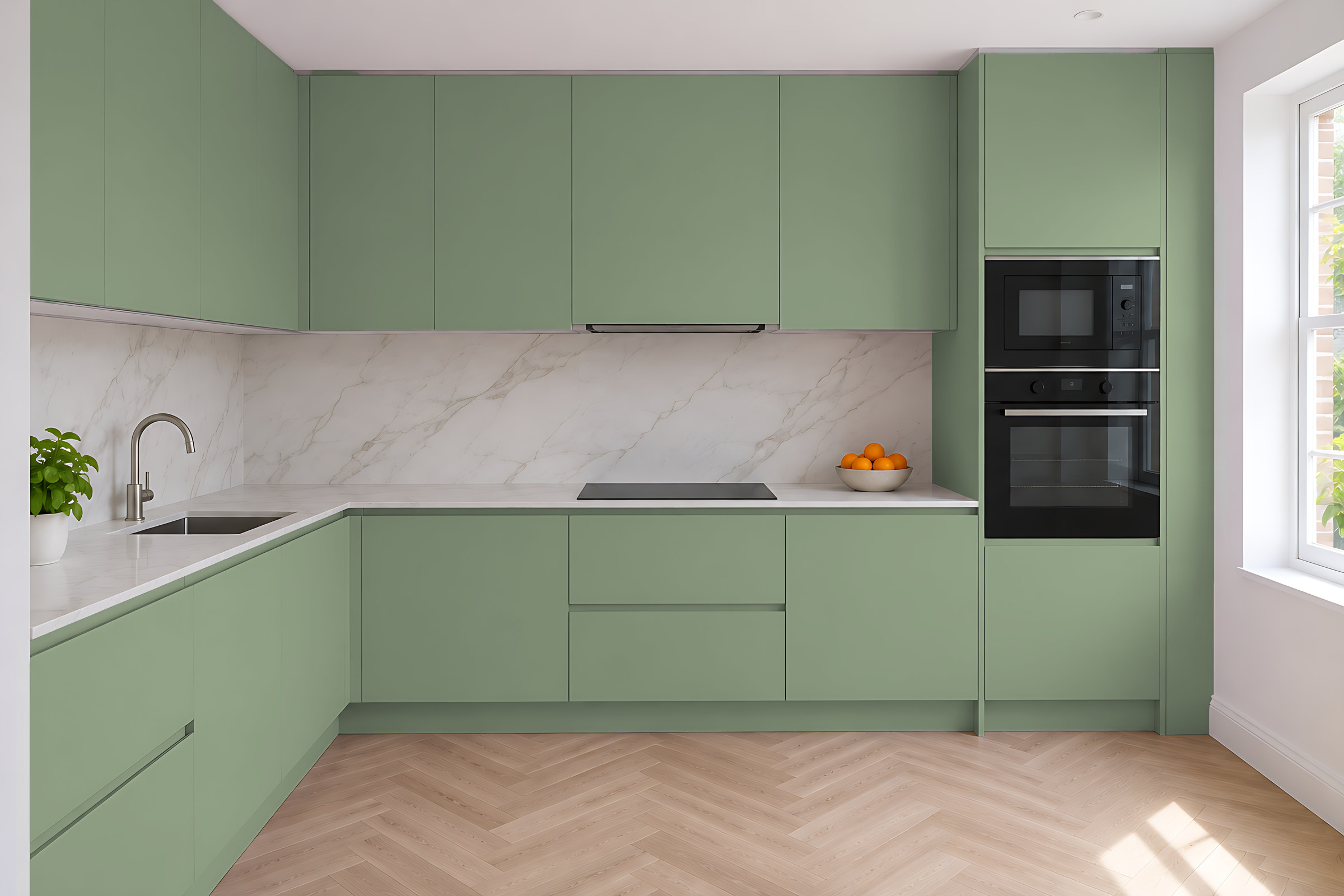
Three greens, soft to deep
Sage is a super-matt colour. Olive and forest green are lacquered, painted doors, made through our colour-match service.
- Sage A soft grey-green. Easy to live with and kind to natural light. Good for: Kitchen, Bedroom or dressing room, Home office, Utility or boot room Try it in the planner
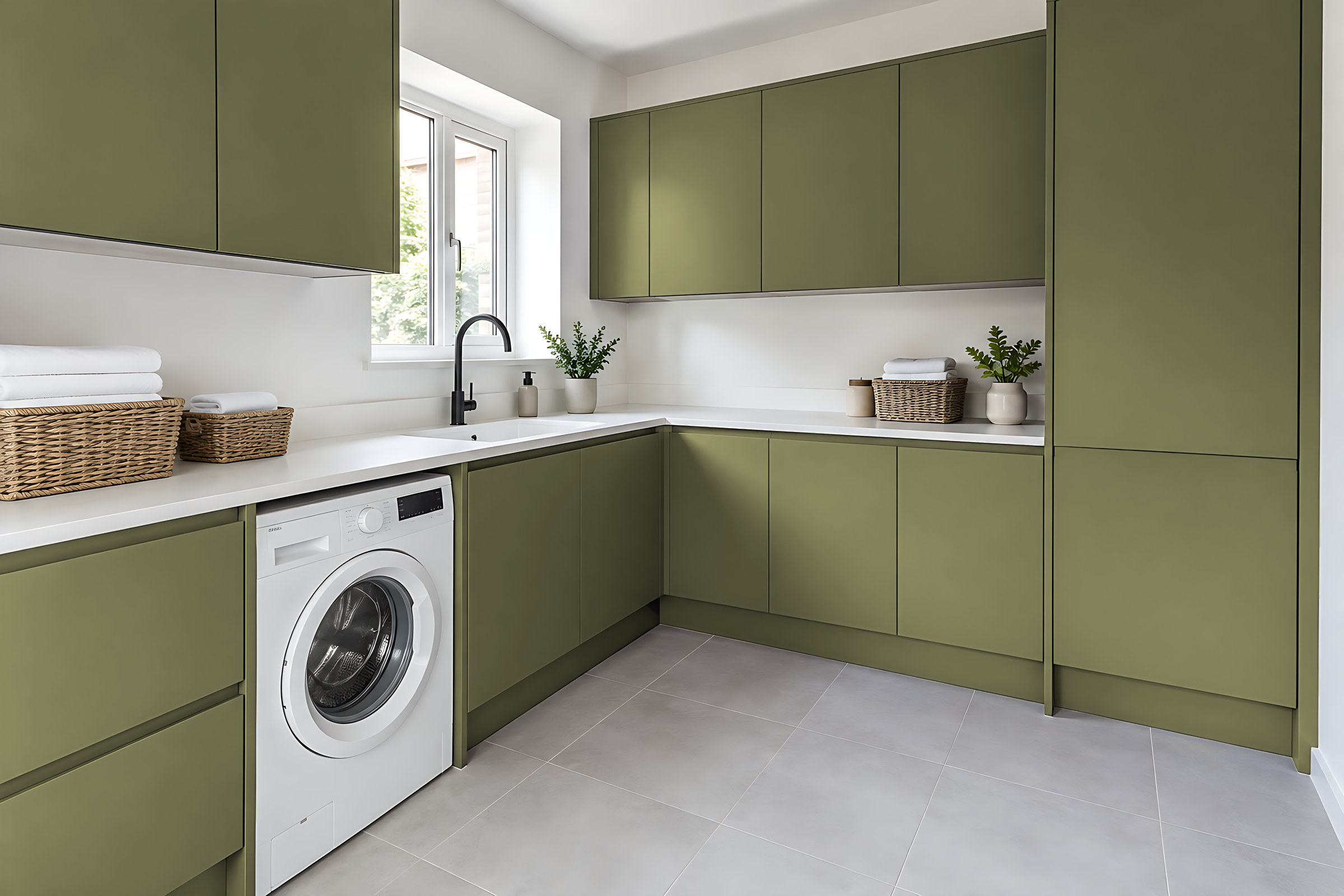
- Olive A deep, earthy green with a little brown in it. Rich next to walnut. Good for: Kitchen, Living room or media wall, Utility or boot room Try it in the planner
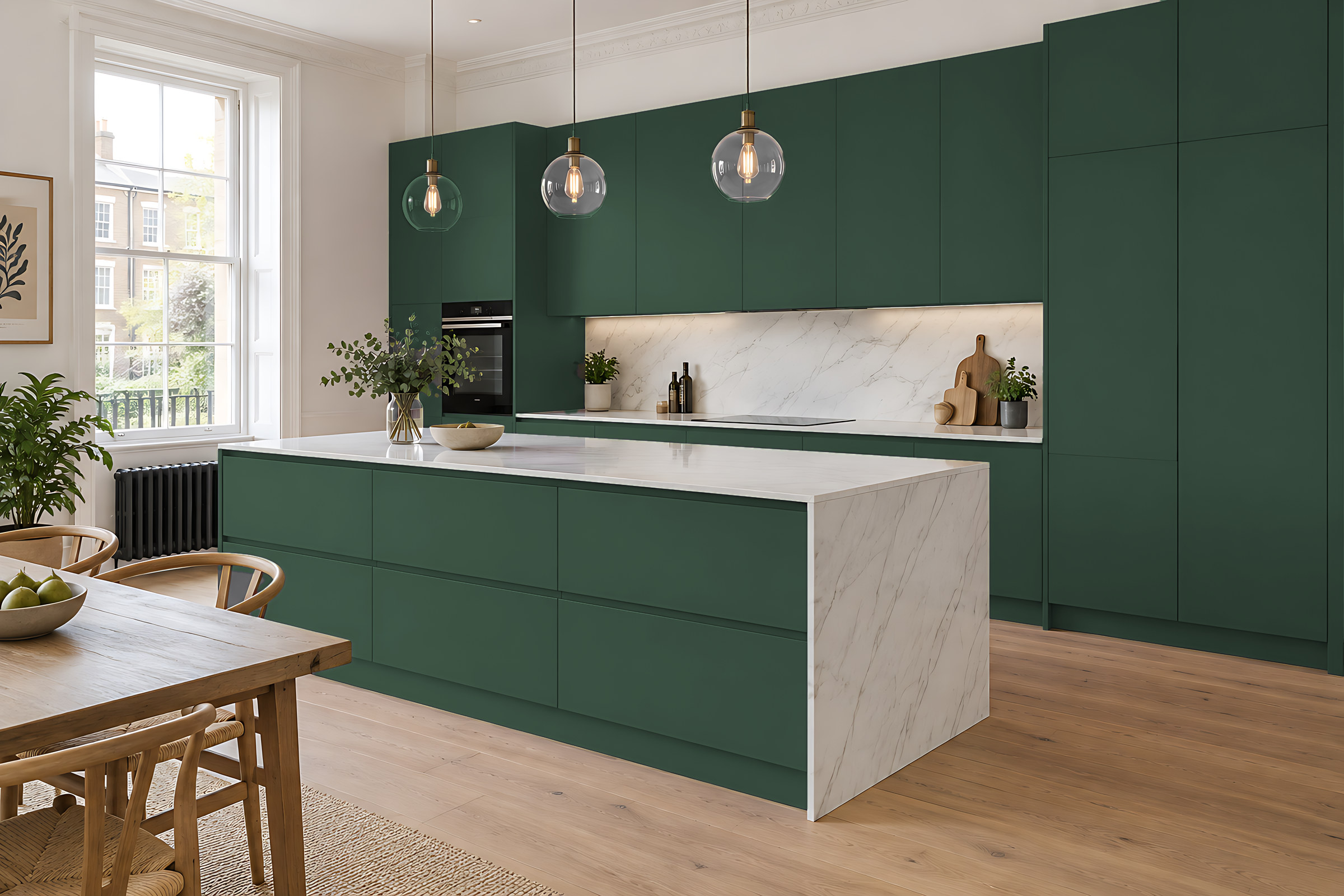
- Forest green A dark, botanical green. Striking with brass and oak. Good for: Kitchen, Living room or media wall, Home office, Utility or boot room Try it in the planner
Screen colours are a guide. Order free samples to see them in your own light.
Choosing your green in four steps
Find north
Note which way the main window faces. It shapes every choice after this.
Match depth to light
Bright, south-facing rooms can carry forest green. Dimmer rooms often suit sage or olive.
Pick the metal
Brushed brass warms every green. Brushed steel keeps sage cool and crisp.
Test it at home
Tape samples to the wall where the units will stand. Look morning and evening.
Light and direction
How do greens behave in a north-facing room?
North-facing rooms get steady, cool light all day. It's lovely to work in, but it pulls colour towards blue and grey, and in the North East winter daylight is short and low as well.
Sage can turn quite grey in that light. If you want it to stay green, give it a warmer partner: natural oak, a cream wall, brass handles. Olive holds up well, because the brown in it keeps it warm. Forest green goes deep and cosy, which can be just right for a kitchen you mostly use after dark, provided there's good light under the wall units.
South- and west-facing rooms are kinder to every green. They warm sage up and can make olive look almost golden late in the day.
What to put next to green
-
Brushed brass
The classic partner. Bar handles on slab doors, round knobs on framed ones.
-
Oak
Natural oak shelves or a solid oak worktop soften all three greens.
-
White worktops
Soft white or marble-look quartz keeps forest green fresh and sage bright.
-
Walnut
Rich beside olive, for a mid-century kitchen or a snug.
-
Warm white walls
Skip brilliant white. A soft, slightly warm white makes green look intentional.
-
Framed doors
Sage on a Shaker-style door is a modern classic for good reason.
Olive in a utility room
Olive is forgiving of muddy boots and laundry days. Add the moisture-resistant multi-ply carcass option and the room is ready for steam and wet coats.
Green finishes: your questions
Anything else, send us a message and we'll talk it through.
Will a green kitchen date?
Muted greens such as sage have been used in kitchens for generations. If you want an easy route back later, keep the green on the doors and the worktop and walls neutral.
Can I have green base units and lighter wall units?
Yes. Colour on the base units or island, with lighter wall units above, keeps a smaller kitchen feeling open.
How do I clean a painted green door?
Gently: a soft damp cloth, a little mild soap, then dry. No abrasive pads or strong cleaners. The same care suits our super-matt doors.
Does green work in a bedroom?
Sage is calm in a bedroom and looks good on full-height wardrobes, especially with an oak-effect interior. Fitted wardrobes.
Three greens, side by side
Order free samples
Ask for sage, olive and forest green together. Three greens on your own wall settle the choice faster than any photo.
Ready to see your room in green?
Send us photos and rough wall sizes. We'll come back with a design in the green you like and a price range, at no cost.
Free guide
Get the free planning guide
Measuring, styles, finishes and how to plan your budget, in one short guide. Then the odd email with ideas worth stealing.
Keep exploring