Fluted and slatted
Grooves that catch the light, on the pieces you want noticed
Fluting turns a plain run into something you want to touch. Slats add rhythm and a little depth. Both look their best as a feature, framed by quieter doors.
Where it goes
Four places fluting earns its keep
Pick the surface people see first, or the one they walk past every day.
Island ends and backs
The side people sit at and pass on the way in. Fluting there catches the eye from the doorway and gives the seating side some character.
KitchensMedia walls
Slats behind the TV soften a big dark screen, and the gaps can hide a strip of LED light.
Media wallsHeadboard walls
A slatted panel behind the bed with bedside shelves built in. It frames the bed and ties in with fitted wardrobes on the same wall.
Fitted wardrobesDressing tables and bars
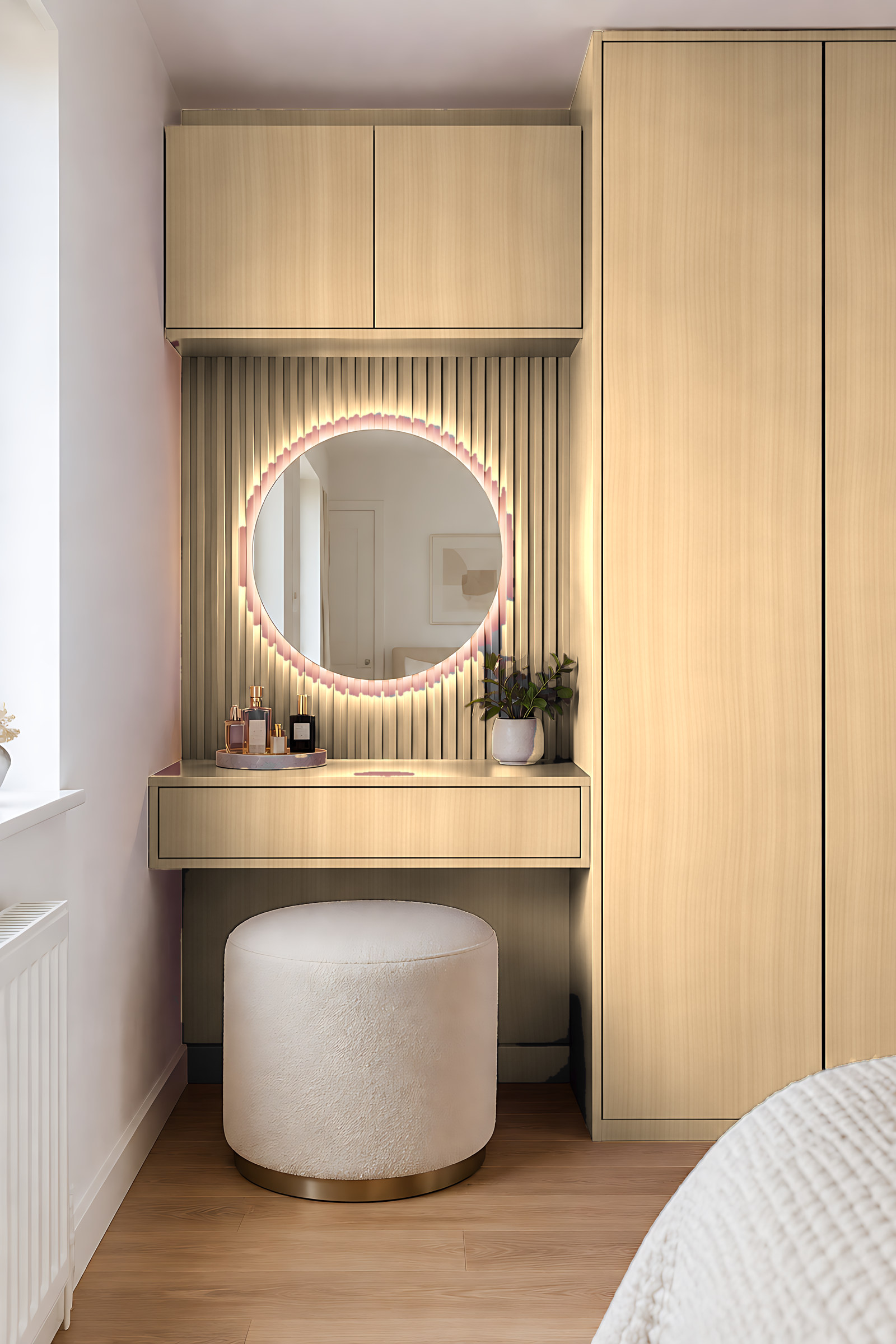
A fluted drawer front or backdrop gives a small piece real presence.
Dry bars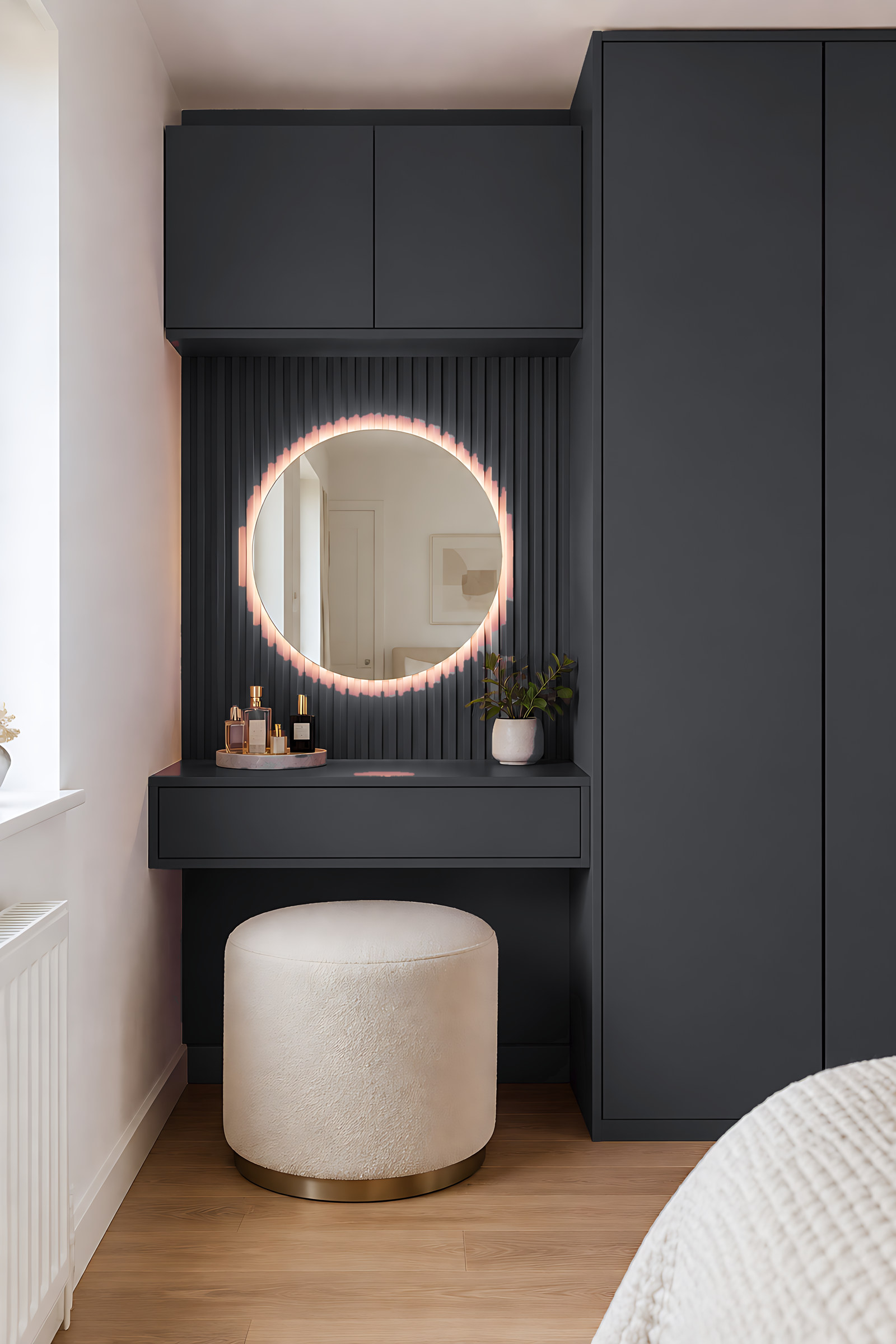
Light and shadow
How the grooves change through the day
A fluted surface is never just one colour. Each groove holds a sliver of shadow, so the same door looks crisp and graphic in morning light and soft, almost velvety, under a lamp at night.
Side light makes the most of it. A window to one side, or an LED strip running down the edge of a panel, draws out every line. Lit flat from the front, fluting goes quiet, which is no bad thing on a wall you look at every day.
Slatted panels work differently. The gaps between slats are real shadows, so the panel reads as depth rather than texture, especially in darker woods like walnut.
Flat doors for the clothes, slats where the run turns
Tall plain doors hold the wardrobe. Then a slatted panel takes over behind the dressing table. The contrast is what makes it work.
Mixing fluted and flat doors
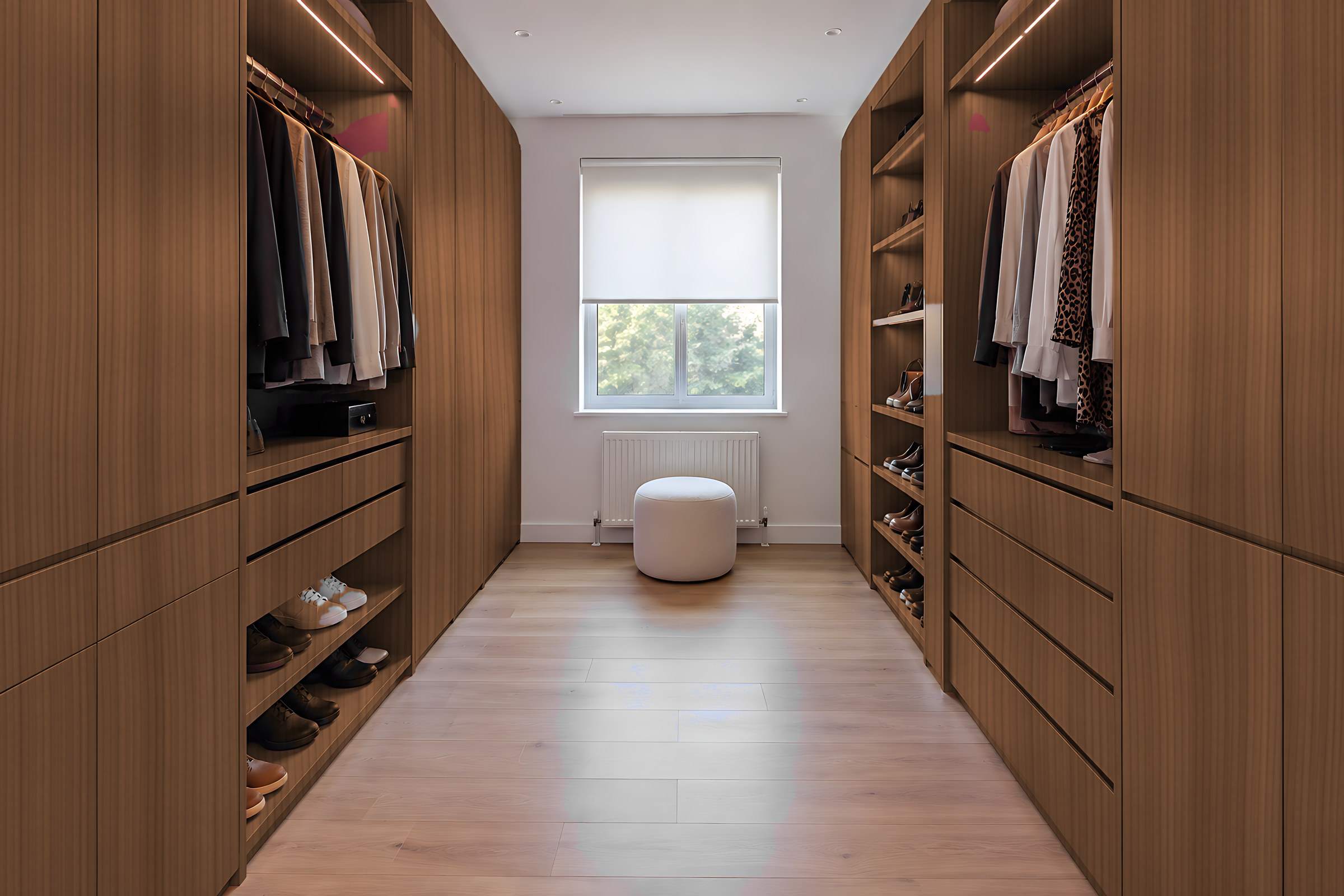
Most good designs use fluting sparingly. These are the combinations we draw most often.
-
Fluted island, flat runs
The island becomes the centrepiece while the wall runs stay handleless and calm.
-
Flat doors, fluted end
Just the tall end panel or a single larder door. A small move that changes the whole run.
-
One colour, two surfaces
Fluted and flat in the same finish. The difference only shows as the light moves.
-
Wood slats, painted doors
Oak or walnut slats beside sage or navy doors. Warm against cool.
-
Reeding with curved ends
Rounded corners and fluting together have a gentle mid-century feel.
-
Keep the opening simple
Push-to-open or a slim edge pull leaves the grooves uninterrupted. Compare opening options.
Keeping the grooves clean
Dust settles in grooves. Dealing with it takes about a minute.
Brush first
A clean, soft paintbrush or make-up brush run down the grooves lifts dust in seconds.
Wipe with the lines
A barely damp microfibre cloth, moved along the grooves rather than across them.
Dry it off
A dry cloth afterwards stops water sitting in the channels.
Leave out the scourers
Abrasive pads and cream cleaners can dull the finish on the ridges.
Finishes people choose for fluting and slats
Woodgrains show off grooves and gaps beautifully. Deeper colours make them dramatic.
- Light oak Pale, Scandinavian-feeling oak with a gentle grain. Good for: Kitchen, Bedroom or dressing room, Living room or media wall, Home office, Children's room About light oakTry it in the planner
- Natural oak Honey-toned oak that warms up any colour next to it. Good for: Kitchen, Bedroom or dressing room, Living room or media wall, Home office, Utility or boot room About natural oakTry it in the planner
- Walnut Deep chocolate brown with a lively grain. Good for: Kitchen, Bedroom or dressing room, Living room or media wall, Home office About walnutTry it in the planner
- Dark elm Dark timber with a smoky, almost charcoal tone. Good for: Kitchen, Bedroom or dressing room, Living room or media wall About dark elmTry it in the planner
- Sage A soft grey-green. Easy to live with and kind to natural light. Good for: Kitchen, Bedroom or dressing room, Home office, Utility or boot room About sageTry it in the planner
- Anthracite A soft charcoal. Modern, and the super-matt surface shows fewer marks than gloss. Good for: Kitchen, Bedroom or dressing room, Living room or media wall, Home office About anthraciteTry it in the planner
We confirm which finishes your fluted or slatted design can be made in at the design stage.
Free samples
See the wood next to your floor
Choose up to five finishes, free. Lay them beside your flooring and worktop before you commit to a feature wall.
Free design
Where would a fluted panel go in your room?
Send a photo. We'll show it in a render, with a price range, at no cost.
Free guide
Get the free planning guide
Measuring, styles, finishes and how to plan your budget, in one short guide. Then the odd email with ideas worth stealing.
Questions people ask
Anything else, send us a message and we'll talk it through.
What's the difference between fluted and slatted?
Fluted panels have rounded grooves shaped into the surface, a bit like reeding. Slatted panels are separate slats with gaps between them, so they cast real shadows. Fluting feels softer; slats feel more architectural.
Can fluted doors be handleless?
Yes. Push-to-open is popular, because nothing interrupts the grooves. A slim edge pull along the top works well too. See all the opening options.
Are fluted doors harder to keep clean?
A little, because dust can sit in the grooves. A soft brush once a week and a damp cloth along the lines keep them fresh. In a busy kitchen, many people keep fluting to the island or end panels and use flat doors by the sink and hob.