Textures and statement finishes
Micro-cement, travertine, linen and leather looks for feature doors
Some surfaces ask to be touched. These four textured boards bring the calm of stone, plaster and fabric to the doors and panels you want people to notice.
The four textures
Each is a textured board finish with the look of the real material, on a made-to-measure door you can wipe down.
- Micro-cement effect A soft, mottled plaster look. Calm and very current. Good for: Kitchen, Living room or media wall, Utility or boot room Try it in the planner
- Travertine effect The layered look of Roman travertine stone, for feature panels. Good for: Kitchen, Living room or media wall Try it in the planner
- Linen texture A woven-fabric texture for wardrobe doors and dressing rooms. Good for: Bedroom or dressing room Try it in the planner
- Leather texture A soft, grained leather look for drawer fronts and panels. Good for: Bedroom or dressing room, Home office Try it in the planner
Screen colours and textures are approximate. A sample shows the surface far better than a photo can.
Where it works
Use texture where the eye lands first
Texture is strongest in small doses. A travertine-effect island end. A micro-cement media wall. A run of linen-texture wardrobe doors with plain panels either side. Let it be the one thing that's different, and the rest of the room can stay quiet.
Micro-cement effect
A soft, mottled plaster look for media walls, utility rooms and kitchen end panels. It sits happily beside oak and pale worktops, and it's a natural fit for Japandi rooms.
Travertine effect
Warm and layered, like the Roman stone it's named after. Lovely as a panel behind a TV or a floating shelf, and a favourite in warm minimal schemes alongside cashmere and natural oak.
Linen texture
A fine woven surface that softens a wall of fitted wardrobes. Tall doors read as fabric rather than flat colour, which suits a bedroom you want to feel restful.
Leather texture
A soft grain for drawer fronts, dressing-table panels and the front of a desk in a home office. Warmth without pattern.
Colours and woods that partner texture
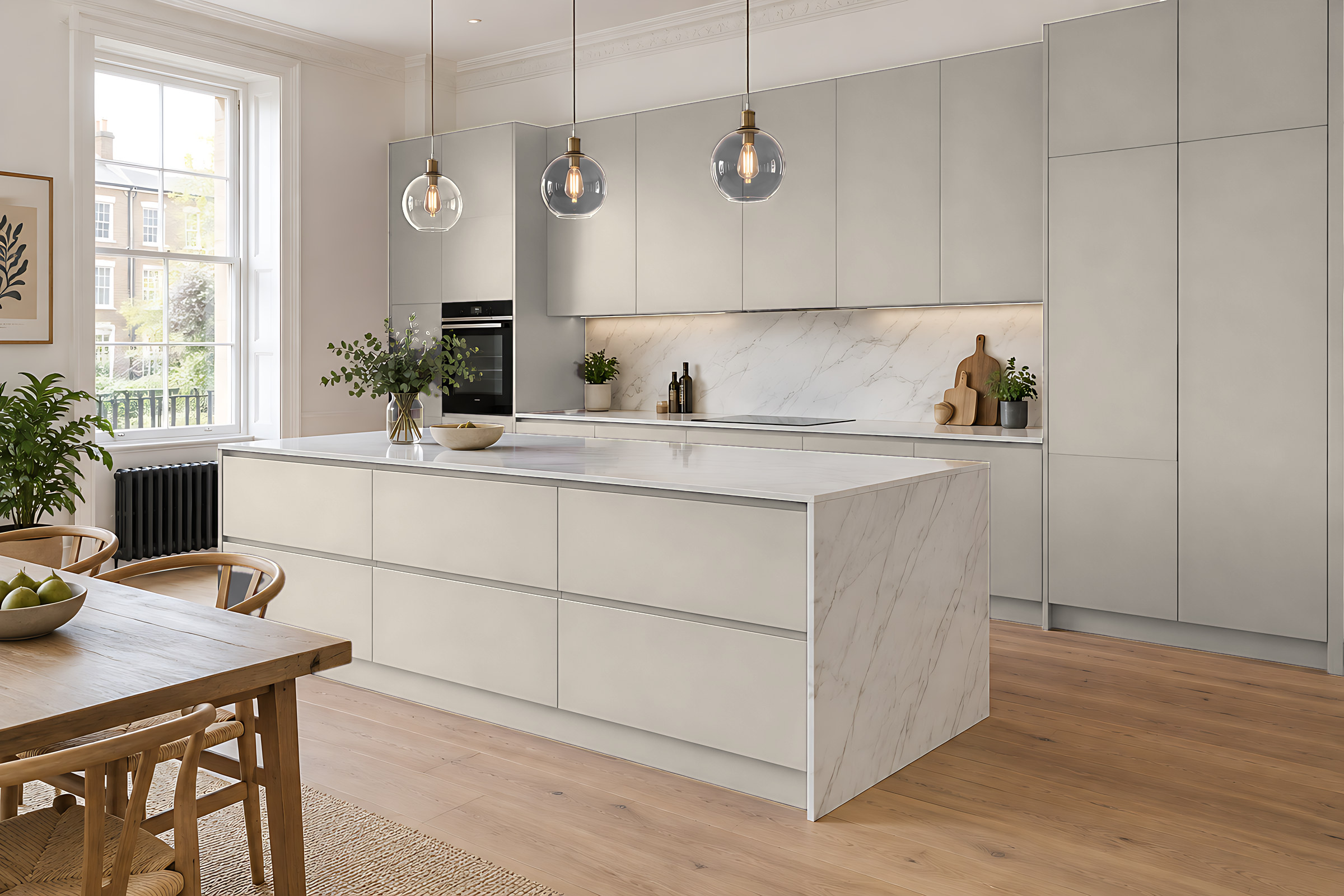
These renders show partner finishes, not the textures themselves. Your own render shows the textured panels exactly where you choose them.
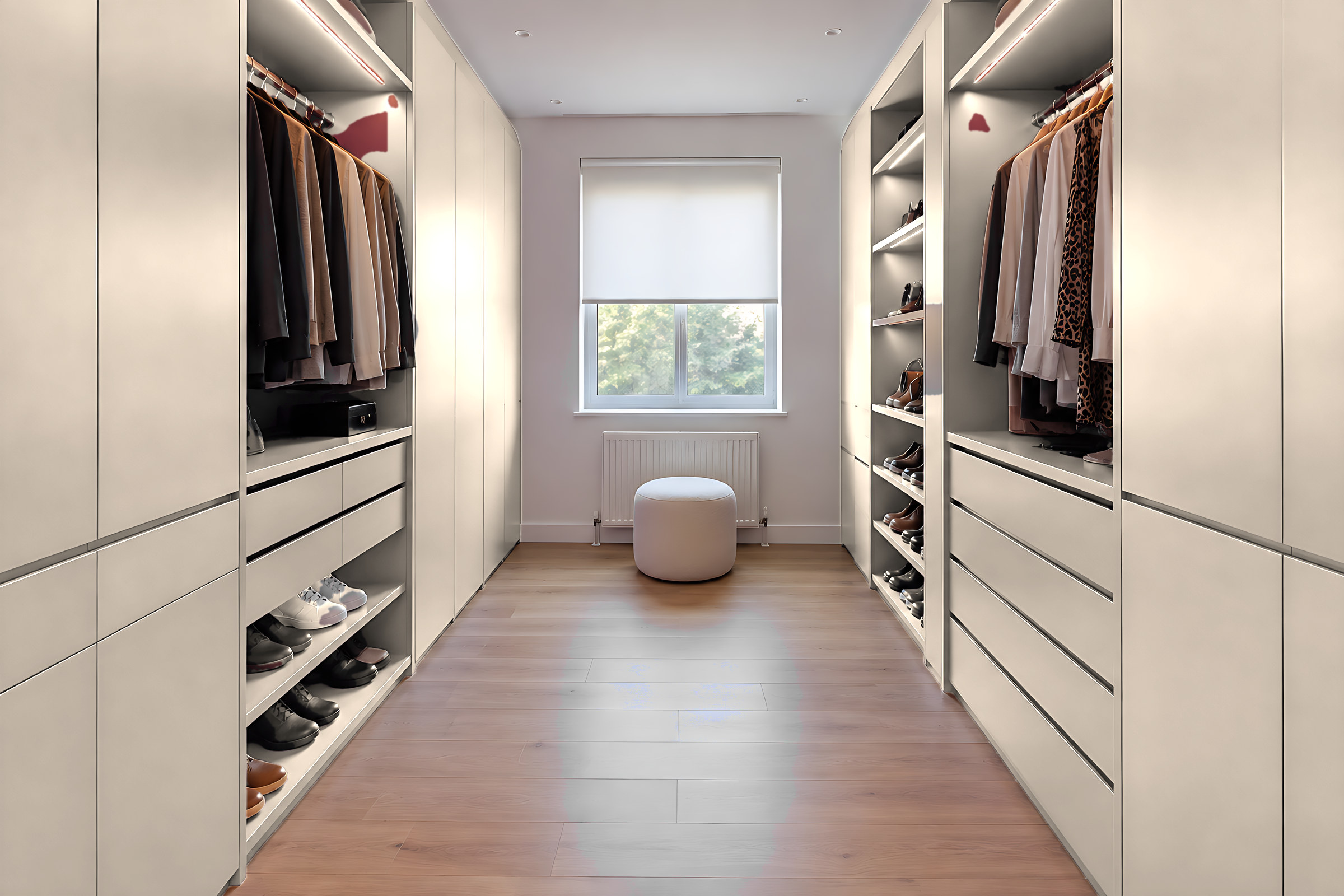
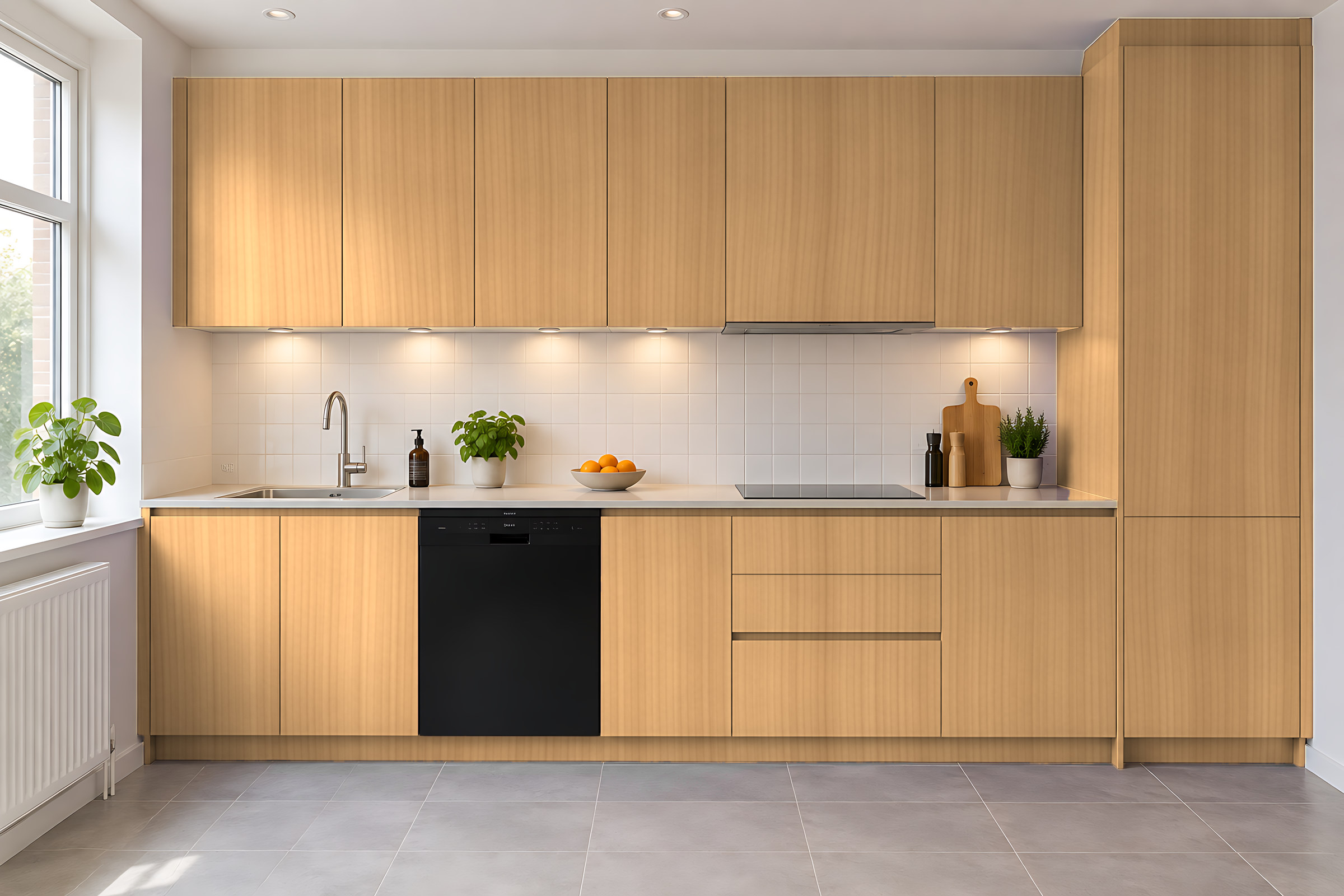
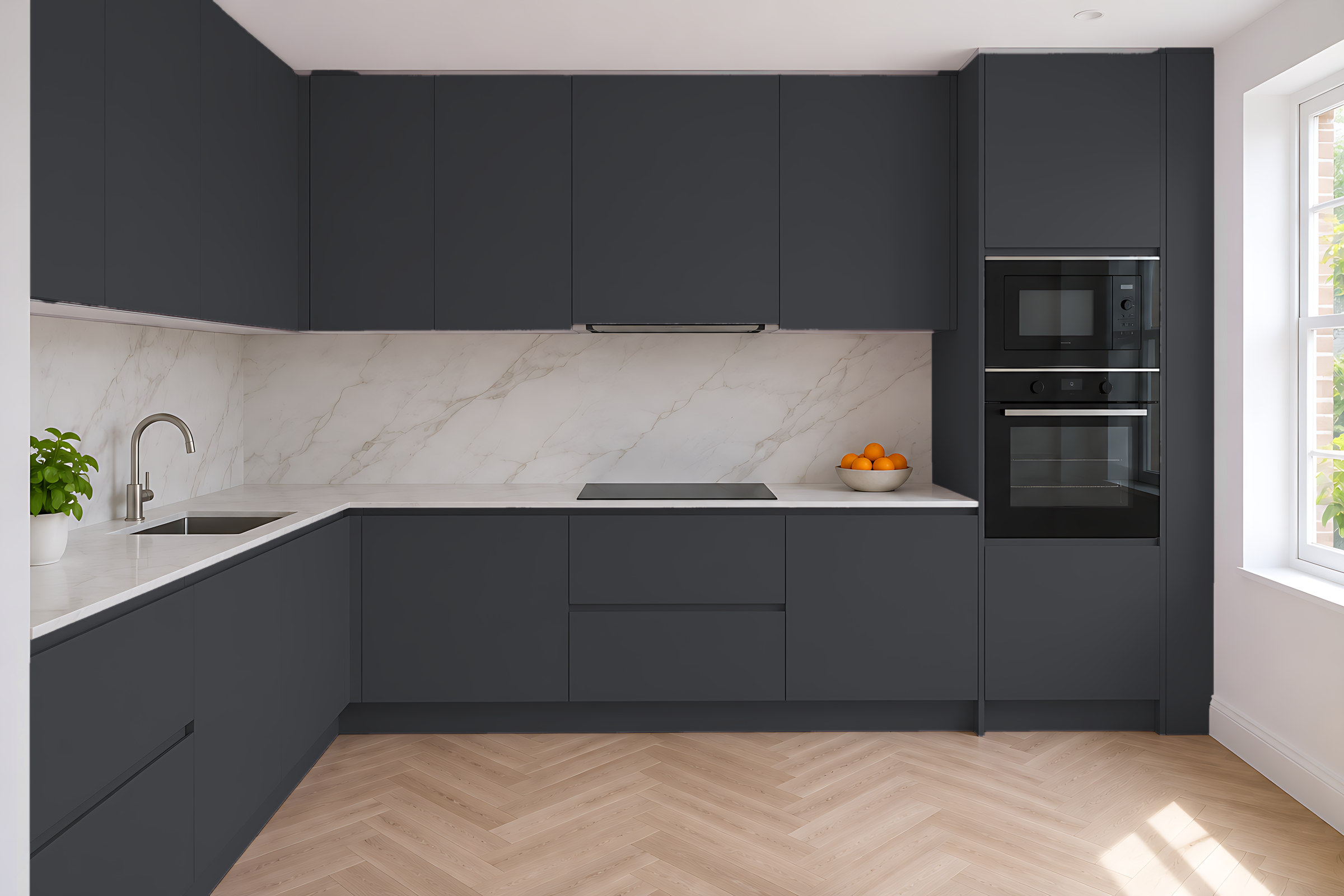
Ask for any pairing as a render with your free design.
Before you settle on a texture
-
Look at it in the eveningLight from the side, from a lamp or an LED strip, shows texture far more than flat daylight does.
-
Keep it to one or two surfacesA feature wall or an island looks considered. Every door at once can feel busy.
-
Think about handsOn doors you open many times a day, a handle or an edge pull keeps fingers off the textured face.
-
Notice the edgesEdges are banded in a matching colour, so the finish carries round every corner.
-
See it at full sizeHold the sample against the actual wall it's for. A texture that looks subtle in the hand can read stronger across a whole panel.
One textured wall can do more than a room full of colour.
Pair it with a plain super-matt door and let the texture lead.
Free, posted to you
Feel the textures before you choose
Pick up to five. Hold them up to your wall at different times of day and run a hand across them. They're yours to keep.
Free design
Show us the wall you'd like to make a feature of
Send a photo and rough sizes. We'll come back with a render, a price range and a suggestion for where the texture should go.
Free guide
Get the free planning guide
Measuring, styles, finishes and how to plan your budget, in one short guide. Then the odd email with ideas worth stealing.
Questions people ask
Anything else, send us a message and we'll talk it through.
Is the micro-cement effect real cement?
No. It's a textured board finish with the look of hand-trowelled plaster. It's much lighter than the real thing, and there's no wet plastering involved.
Can textured finishes go in a kitchen?
Micro-cement and travertine effects suit kitchen end panels, islands and tall units. Near the sink and hob, where doors are opened with wet or floury hands, a smooth super-matt door is easier to keep clean.
How do I clean a textured door?
A soft cloth with warm water and a drop of mild washing-up liquid, then dry it. Avoid scourers and cream cleaners, which can polish the texture flat.
Can I mix a texture with a woodgrain?
Yes, and it often works well. Travertine with natural oak and micro-cement with light oak are both calm pairings. See the oak and woodgrain finishes.