Styles · Japandi
Japandi: pale oak, soft stone and room to breathe
Where Japanese restraint meets Scandinavian comfort. Fewer things, better made, and everything else behind a quiet door.
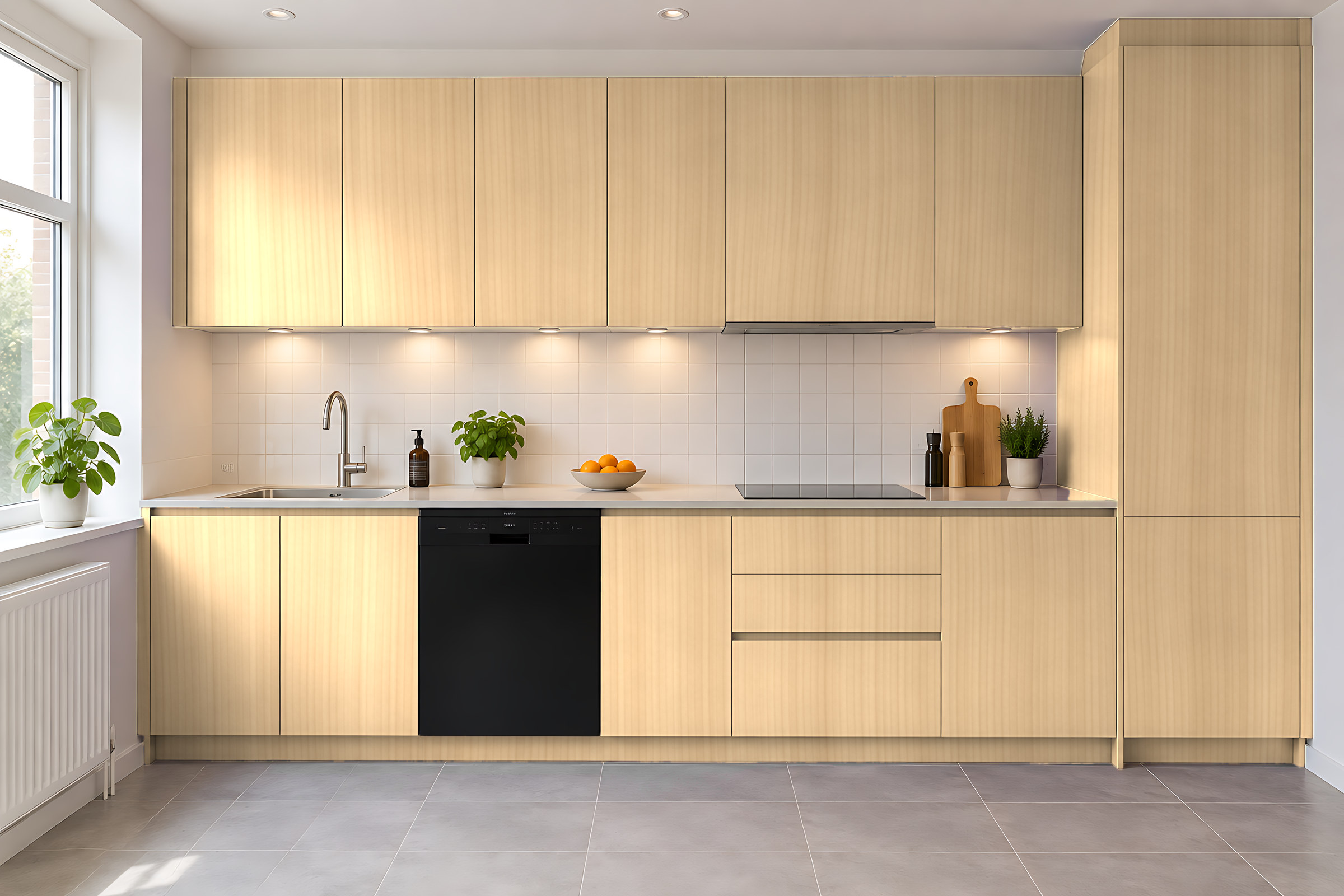
What defines it
What makes a room feel Japandi?
It's less a colour scheme than a habit: keep the surfaces clear, let natural materials do the talking, and leave a little empty space on purpose.
Materials
Pale, straight-grained oak on doors and shelves. A plaster-like micro-cement effect for a feature panel, a splashback wall or the end of an island. Textures you want to touch, in finishes that stay matt.
Colour
Warm neutrals rather than white: cashmere, oatmeal, sand. Then one dark note, usually ink black, on a single tall unit, a shelf edge or the handles. It stops the room looking washed out.
Doors and handles
Flat slab doors with an integrated J-pull or push-to-open, so the fronts read as one calm plane. If you'd rather have something to hold, a slim edge pull keeps the line.
Lighting
Low and soft. A strip of LED under a floating shelf or along a plinth, rather than bright spots overhead. Your electrician fits and connects it, and we mark every position on the drawings.
What to keep off show
Kettle, toaster, chargers, the post. A tall unit that hides the small appliances does more for this look than any finish. Open shelves are for the few things you'd happily look at all day.
Japandi, room by room
The same ideas, translated for the three rooms people ask about most.
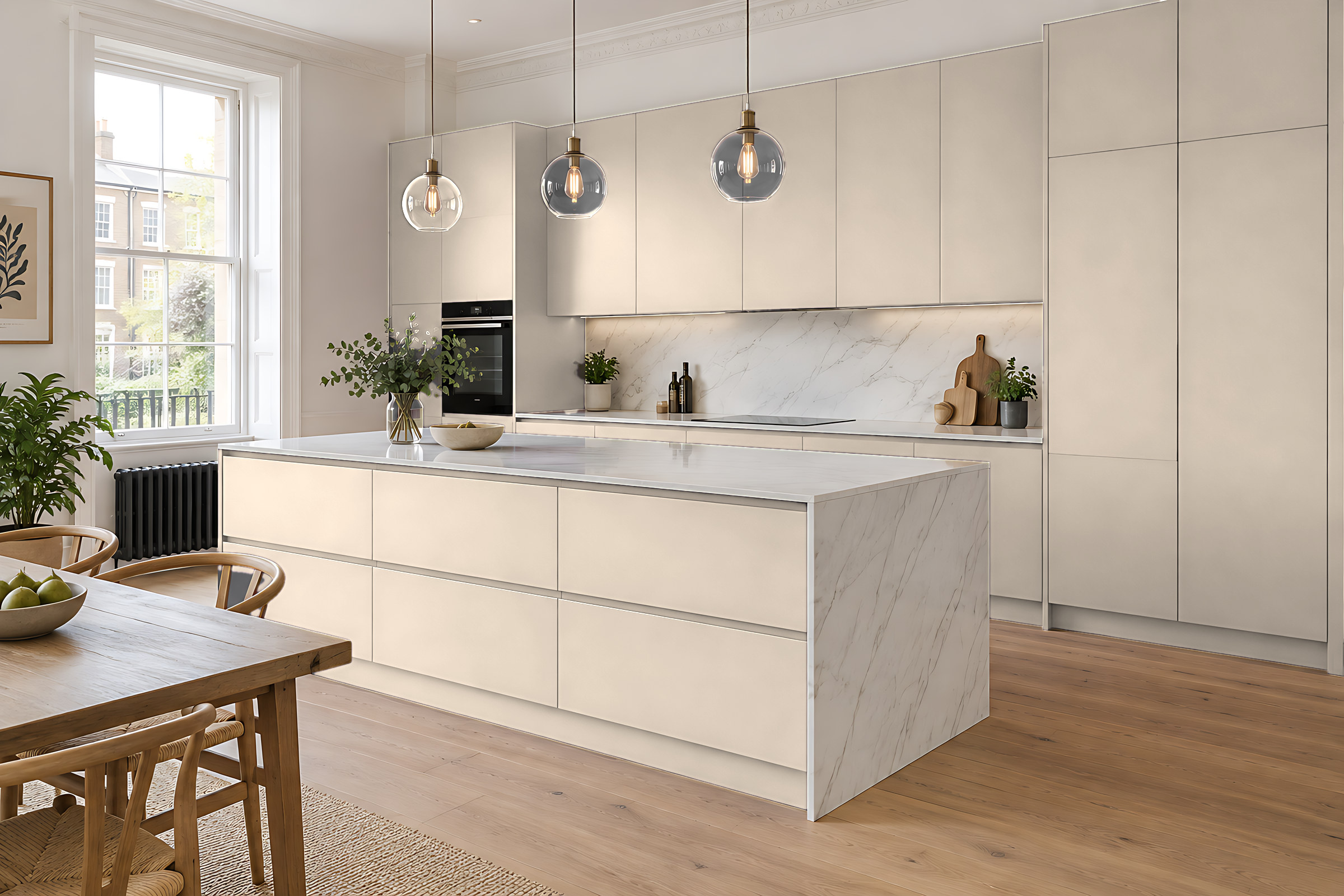
Kitchens
A kitchen that looks like furniture
Run tall units to the ceiling so there's no dusty top. Keep wall units to one side, or leave them out and fit a single oak shelf instead. A cashmere run with oak accents is the softer version. See made-to-measure kitchens.
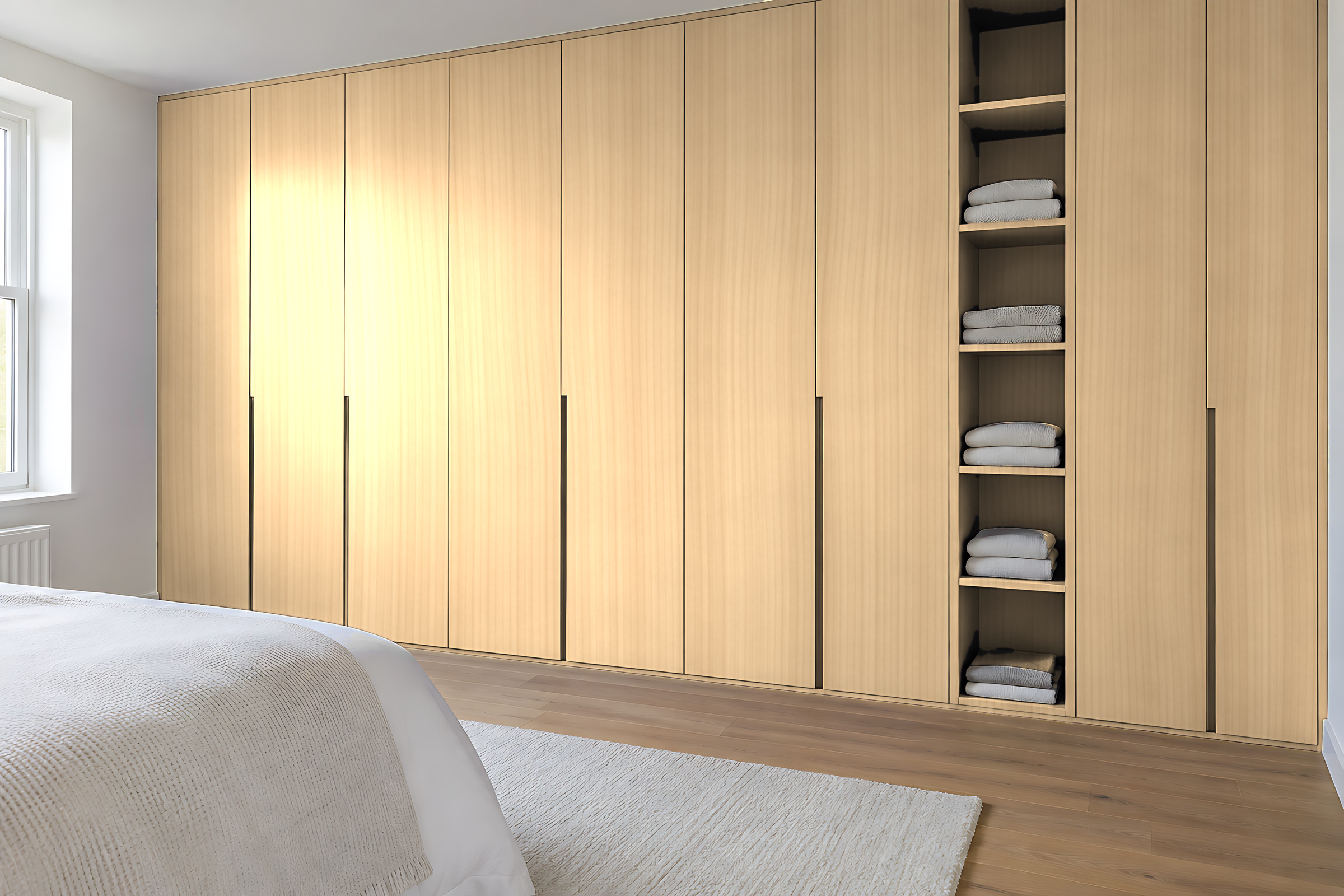
Wardrobes
One timber wall, no visible handles
Light oak doors that run floor to ceiling without a join turn a wardrobe into a calm wall of wood. Inside, keep it just as ordered: divided drawers, a pull-out trouser rack, shoes on their own shelves. More on fitted wardrobes.
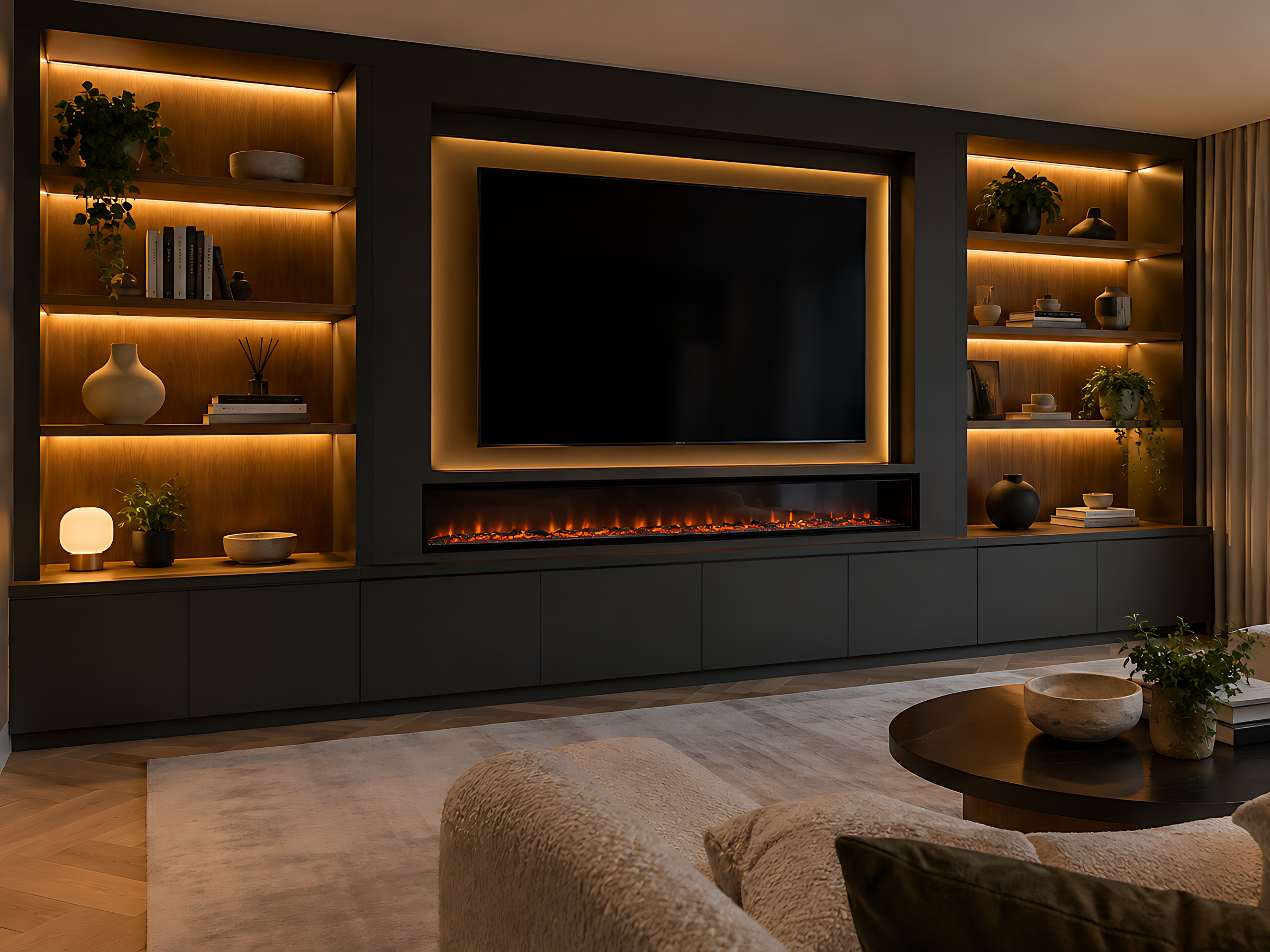
Living rooms
Low, long and mostly closed
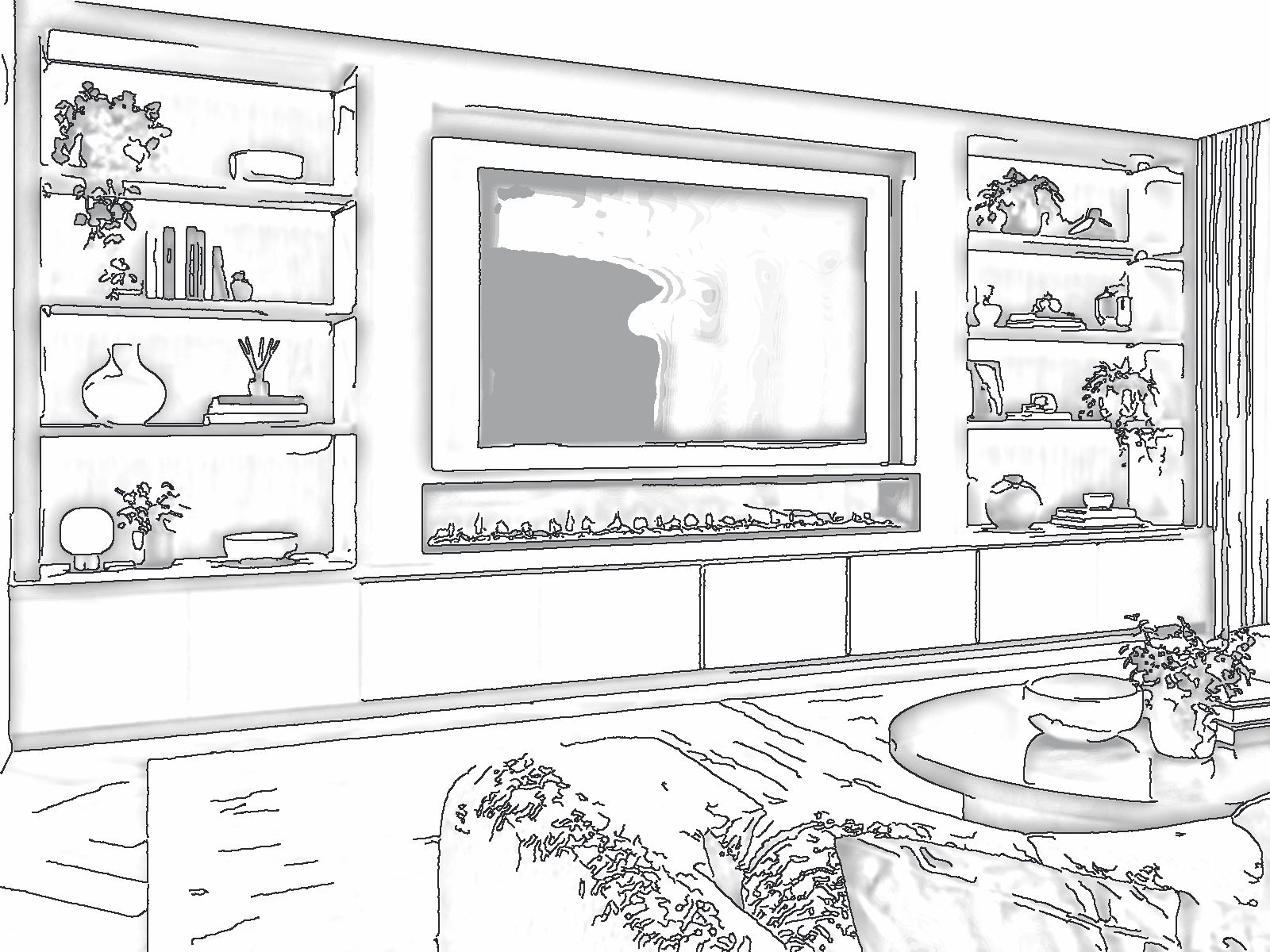
A low wall-hung unit beneath the TV with push-to-open drawers, and a micro-cement effect panel behind it. With a chimney breast, matching low cupboards in each alcove keep things symmetrical. See media walls and alcove units.
The Japandi palette
Four finishes that work together. Start with the oak, then decide how warm or how dark the rest should be.
- Light oak Pale, Scandinavian-feeling oak with a gentle grain. Good for: Kitchen, Bedroom or dressing room, Living room or media wall, Home office, Children's room About light oakTry it in the planner
- Cashmere A warm, creamy beige. Calm with oak, lovely with brass. Good for: Kitchen, Bedroom or dressing room, Living room or media wall, Home office About cashmereTry it in the planner
- Micro-cement effect A soft, mottled plaster look. Calm and very current. Good for: Kitchen, Living room or media wall, Utility or boot room About micro-cement effectTry it in the planner
- Ink black Close to black, softened by the matt finish. Good for: Kitchen, Bedroom or dressing room, Living room or media wall About ink blackTry it in the planner
Screen colours are approximate. Free samples show the real grain and texture.
Empty space is part of the design.
Japandi works because you can see the wall between things. We'll help you decide what earns a place on show, and design a home for everything else.
Make it yours
Japandi in a real house
Few of us live in a minimalist's studio. Here's how to keep the feeling when life gets in the way.
-
A busy family home
Choose cashmere or pebble greige over pale cream for the lower doors, as they forgive scuffs. Add a tall pull-out larder so the cereal boxes have somewhere to go, and save the oak for the parts above hand height.
-
A small room
Use light oak on everything, doors included, so the eye reads one surface. Handleless fronts take nothing from the floor space, and a floating unit lets you see more of the floor.
-
A period house in the North East
Victorian and Edwardian terraces come with tall ceilings, chimney breasts and walls that are rarely straight. Fillers and scribes let calm, flat doors meet uneven plaster neatly, and the alcoves become built-in cupboards.
Want a calmer room?
Send a photo and a note of what has to live there. We'll send back a Japandi design and a price range, free.
Free guide
Get the free planning guide
Measuring, styles, finishes and how to plan your budget, in one short guide. Then the odd email with ideas worth stealing.
Questions people ask
Anything else, send us a message and we'll talk it through.
Is Japandi just minimalism with oak?
Close, but warmer. Minimalism can feel stark; Japandi softens it with natural grain, muted colour and texture. It's meant to be lived in, not just looked at.
Can I have handles on a Japandi kitchen?
Yes. Slim edge pulls or a simple matt black bar handle keep the look. What matters is that the fronts stay flat and quiet.
Does Japandi only work with pale wood?
Light oak is the usual starting point, but a darker oak or a single walnut feature can work if the colours around it stay soft. Order samples of both and look at them together in the room.
Is the micro-cement effect real plaster?
No. It's a board with a soft, mottled plaster look, so it can be made into doors and panels in the same way as any other finish in the range.