Doors and handles
How your doors look, and how they open
Door style sets the character of a room. The way a door opens decides how it feels to live with. Here's every option, side by side.
Door styles
Eight doors, one made-to-measure system
Every style is made to your sizes, in the finishes that suit it.
Flat slab door
Plain and flat. It suits every style and lets the colour or grain do the talking.
Handleless, J-pull
A finger pull shaped into the top edge. Nothing sticks out to catch a hip or a sleeve.
Handleless, channel rail
A recessed aluminium rail runs along the units, between drawers and doors. The cleanest handleless line.
Push-to-open
No handle, no profile. Press the door and it opens. At home on wardrobes and media units.
Framed (Shaker-style)
A centre panel set inside a frame. Classic, especially painted, with knobs or bars. Confirmed for your finish at the design stage.
Modern classicFluted
Vertical grooves that pick up the light. Best as a feature.
Fluted and slattedGlazed
A framed glass door for glassware, books or a collection.
Glass and lightingCurved end
A rounded end panel or shelf that softens the corner you walk past.
Mid-centuryWhich opening suits which door?
There's no wrong answer, only better fits. Most rooms use two or three of these together.
| Opening | How it opens | Best for | Things to know |
|---|---|---|---|
| Handleless J-pull | Fingers hook into a lip shaped along the top edge of the door | Kitchen base units and drawers | A smooth front with a fine shadow line. The lip needs an occasional wipe. |
| Handleless channel rail | Fingers reach into an aluminium channel set between doors and drawers | Long kitchen runs and islands | The rail is built into the units, so it's chosen early in the design. |
| Push-to-open | A press on the door releases it | Wardrobes, media units and wall cupboards | Not the most comfortable choice for tall, heavy doors you open all day, like a larder. Can open if leant on. |
| Slim edge pull | A fine aluminium profile along the top or side edge | Tall doors, drawers and fluted fronts | Shows as a thin metal line, which can be part of the look. |
| Bottom-edge pull | Fingers reach under the lower edge of the door | Wall units above a worktop | Keeps the wall-unit fronts completely plain. |
| Bar handle or knob | A handle you grip and pull | Framed doors, heavy doors and busy family kitchens | The easiest to open with full hands. Choose a metal to suit the colour. |
| Lift-up flap | The door hinges upwards and stays open | Wall units and cupboards over tall units | Needs clear space above when open, which we check against your ceiling. |
Soft-close hinges and full-extension soft-close drawer runners come as standard, whichever opening you choose.
Handles, if you want them
Nine options, from no handle at all to a brushed brass knob.
-
Integrated J-pull
Part of the door itself, so the front stays smooth.
-
Channel rail
An aluminium rail set between doors and drawers.
-
Push-to-open
No handle at all. A gentle press does it.
-
Slim edge pull
A fine aluminium profile on the top or side edge.
-
Bar handle, matt black
Simple and graphic. Sharp against pale oak and white.
-
Bar handle, brushed brass
Warm against green, navy and oak.
-
Bar handle, brushed steel
Crisp beside greys, whites and steel appliances.
-
Round knob, brushed brass
The classic partner for a framed door.
-
Round knob, matt black
Neat on drawers, small doors and children's furniture.
Choosing a metal
Brass, black or steel?
Match the metal to the mood of the colour. Brushed brass warms up cool and deep shades such as forest green, midnight navy and anthracite. Matt black sharpens pale woods and soft whites, the classic Scandinavian pairing. Brushed steel is the quiet option, at home with stone grey and white worktops.
Try to keep to one metal per room. The tap, the oven trim and the handles are all seen together.
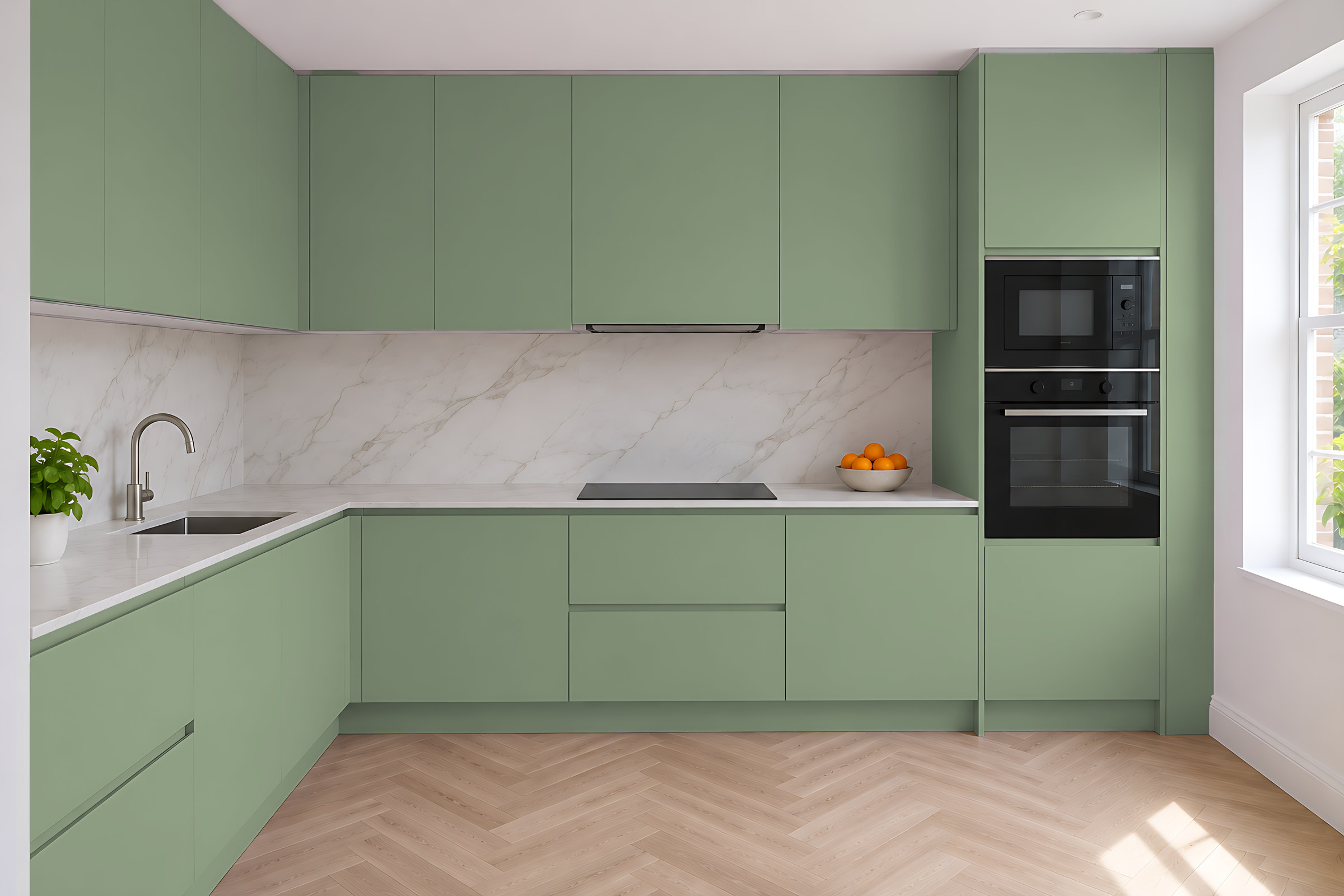
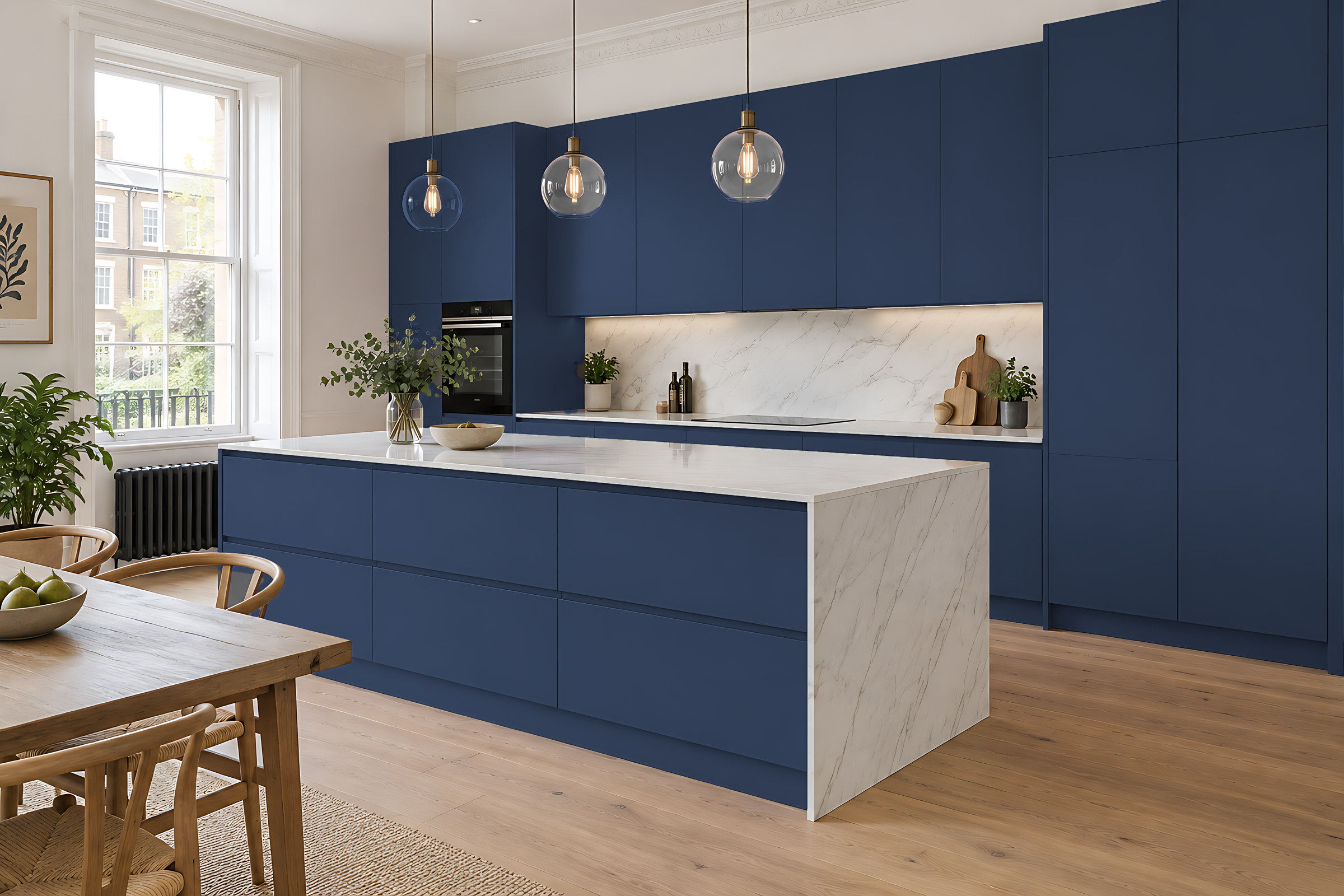
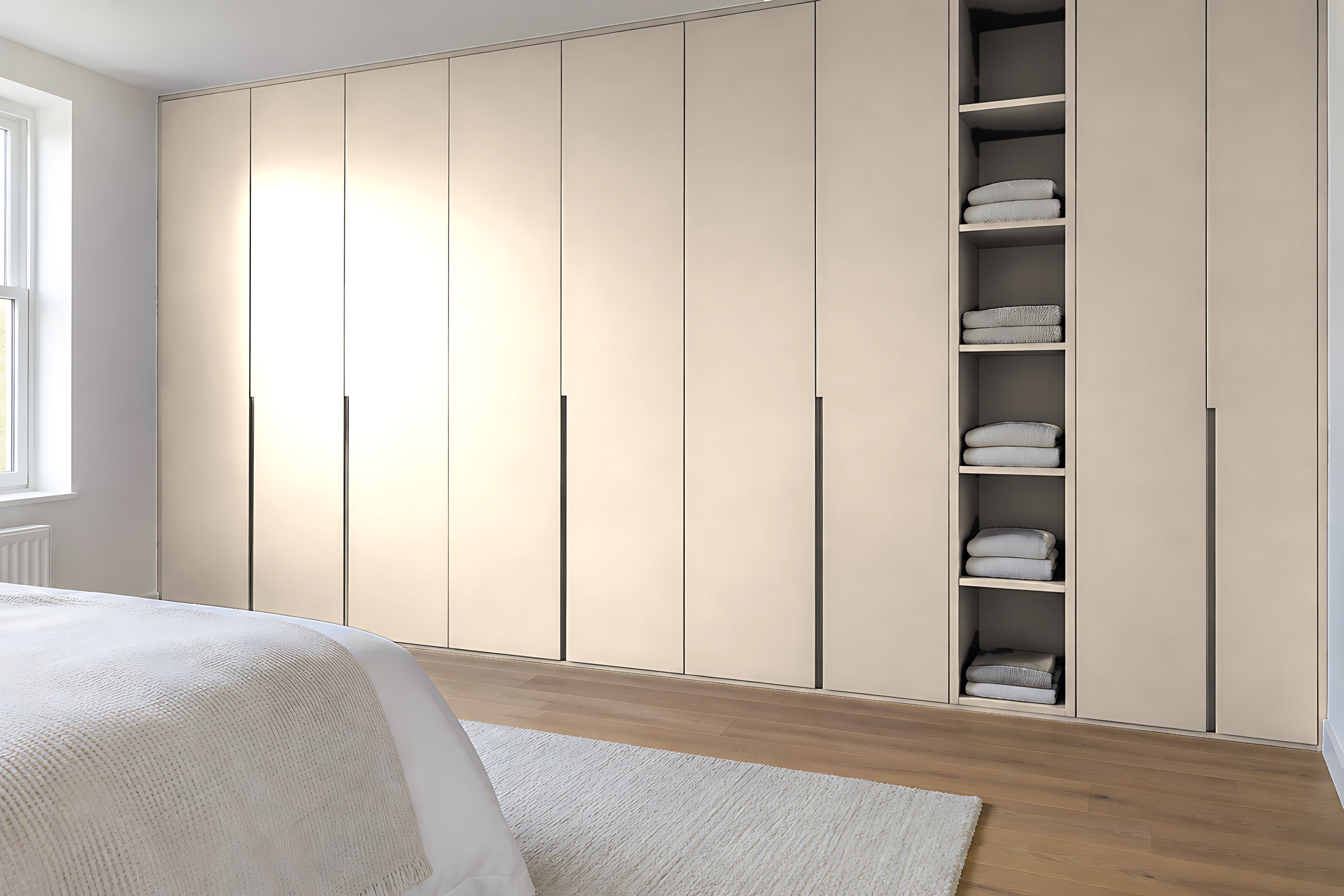
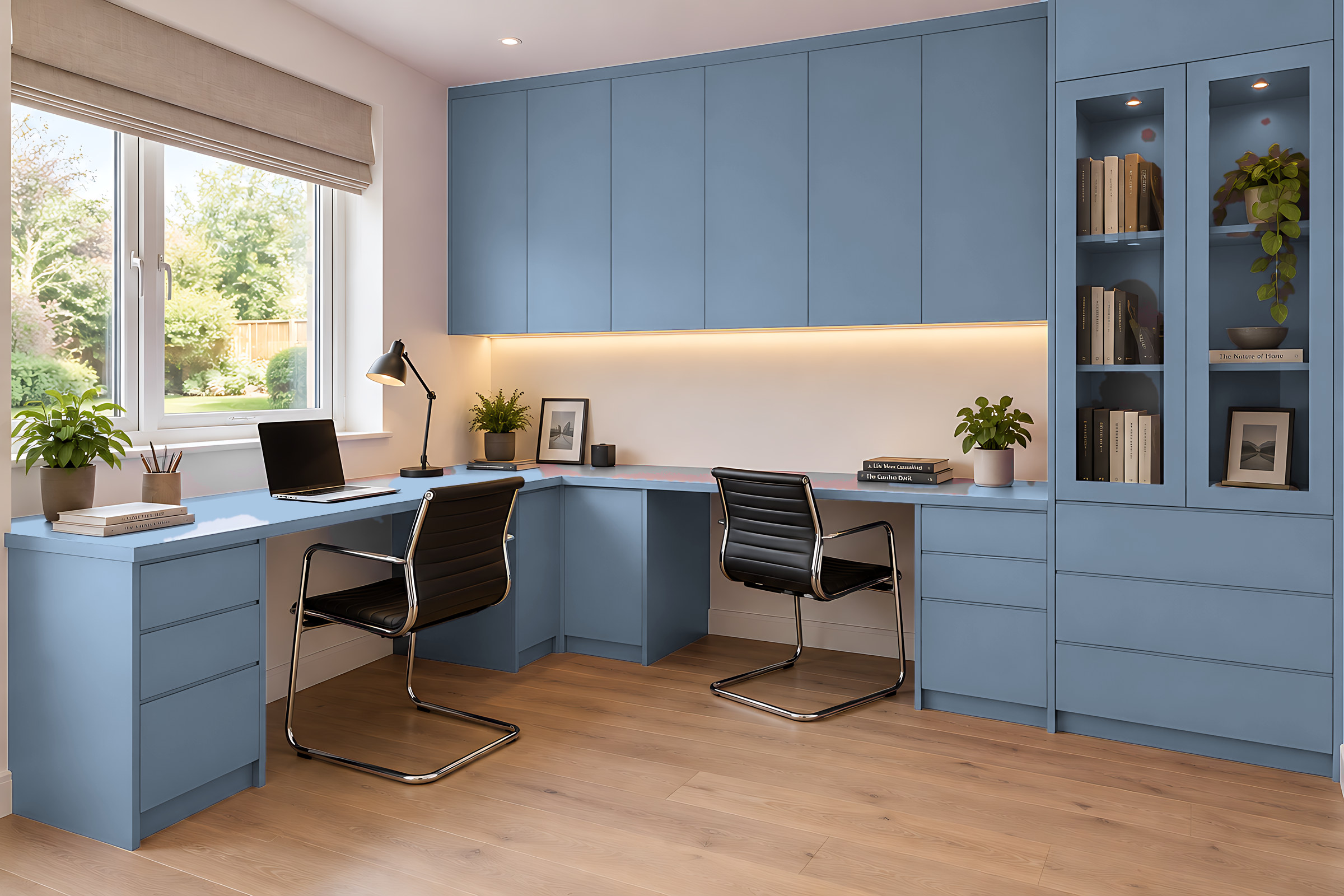
Handleless, in three rooms
Doors and drawers with no handles at all, shown in different finishes.
Free samples
Order samples, then pick the handle
Pick up to five finishes at no cost. Deciding between brass and black is far easier with the door colour in your hand.
Not sure which opening suits you?
Tell us how you use the room. We'll suggest a mix on your free design and show it on the drawings.
Free guide
Get the free planning guide
Measuring, styles, finishes and how to plan your budget, in one short guide. Then the odd email with ideas worth stealing.
Questions people ask
Anything else, send us a message and we'll talk it through.
Are handleless doors harder to open?
Not once you're used to them. J-pulls and channel rails give your fingers a proper edge to grip. Push-to-open is the one to think about for heavier doors you use all day.
Can I mix handles and handleless?
Yes. A common mix is handleless base units with push-to-open wall units, or knobs on a framed dresser beside a plain slab run. We make sure the lines still align.
Will push-to-open doors open by accident?
Now and then, if they're leant on or bumped. That's why we tend to suggest them for wardrobes, media units and wall cupboards rather than low doors in a busy family kitchen.
Do framed doors come in every finish?
Framed, Shaker-style doors are confirmed at the design stage, because not every finish suits a frame. Tell us the colour you have in mind and we'll check.
Where do handles go on a tall door?
Usually at a comfortable height near the middle of the door, or along the edge with a slim pull. Handle positions are shown on your drawings, so you can check them before anything is made.
Is soft-close included?
Yes. Soft-close hinges and full-extension soft-close drawer runners are standard.