Planning around obstacles
The window, the radiator and the socket in the way
Almost every wall has something on it. Here's how fitted furniture works around windows, radiators, sockets and pipes, and which jobs belong to your electrician or plumber.
Windows: build round them, or under them
A window breaks up a wall, but it doesn't have to break up the furniture.
Low windows
Turn the sill into a seat
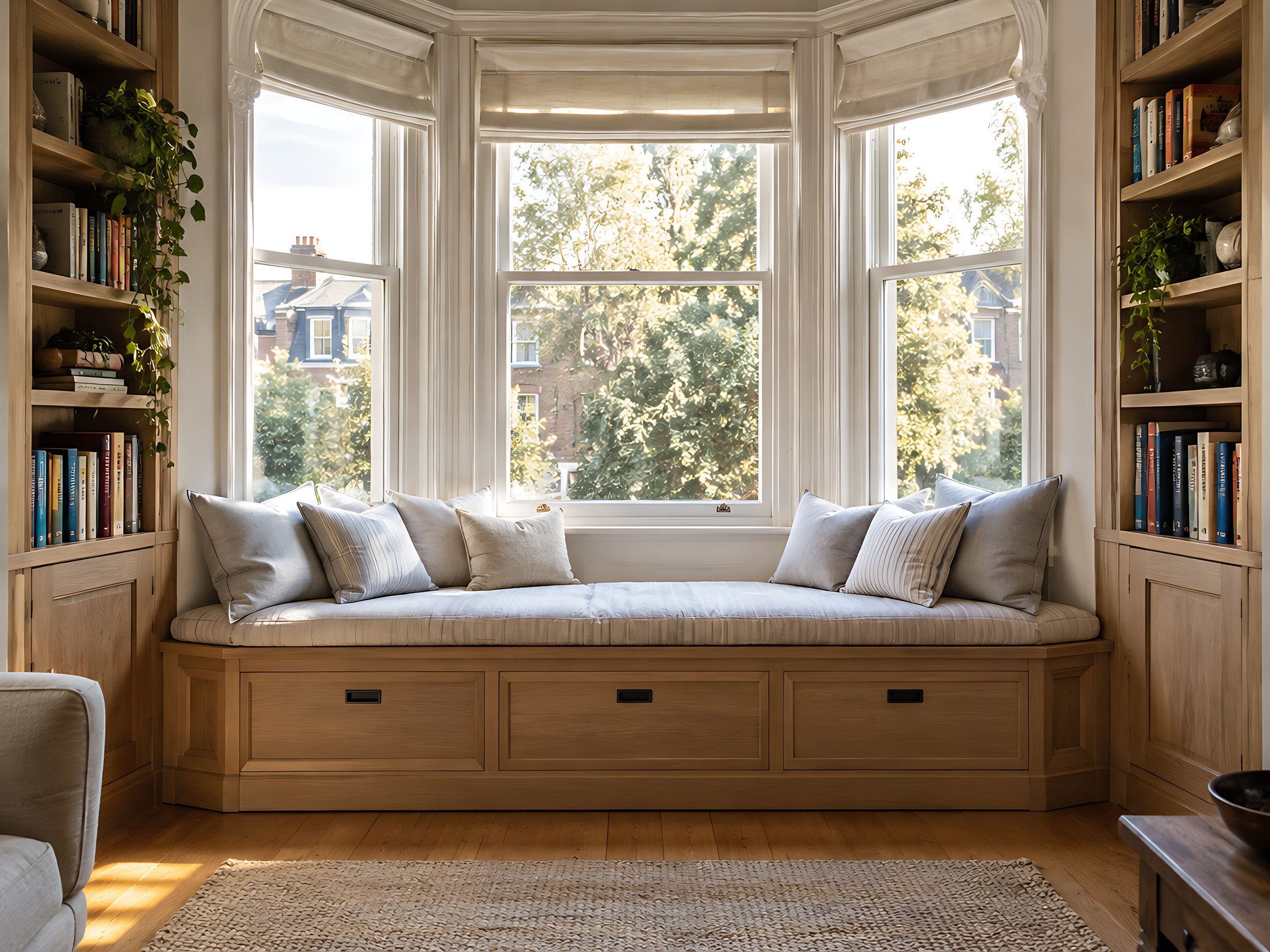
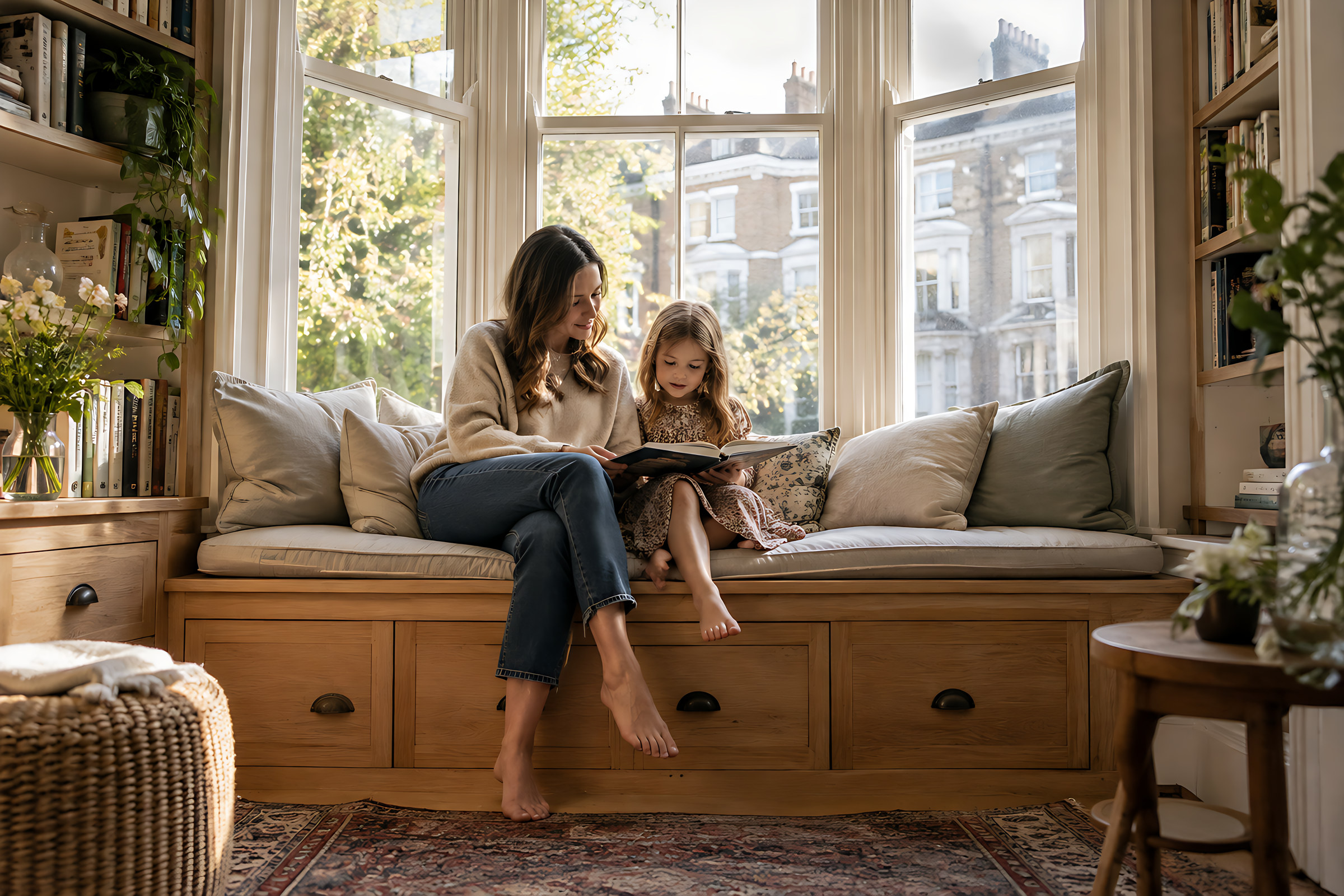
Where the sill is low, a window seat makes the most of it: a cushioned top with deep drawers below, and cupboards or shelves either side running up to the ceiling. Drawers mean you don't have to clear the cushion to reach your things.
Bay windows
Follow the angles of the bay
A bay has three or more faces, each its own width, and the angles between them aren't always what you'd expect. We measure every face and every angle, and the seat is made in sections that meet neatly at the joins.
Tall windows
Units either side, a bridge above
With a tall window, the furniture frames it: tall units either side and, where there's room, a shelf or cupboard bridging over the frame. Leave a margin so curtains and blinds still work, and keep doors clear of any window that opens inwards.
- 450mmA comfortable window-seat height, cushion included. We'll adjust it to your sill.
- 400–500mmA typical seat depth, so you can sit back against the window wall.
- 3facesIn a typical bay, each one measured separately, with the angles between them.
Radiators: three ways to handle them
Furniture and radiators can share a wall. The question is how much heat you're willing to trade for the look.
| Approach | What it involves | Trade-off |
|---|---|---|
| Leave it in the open | Units stop either side with a clear gap, and any shelf above sits well clear so warm air can rise. | You keep all the heat. The radiator stays on show. |
| A vented panel in front | A cover with a slotted or fluted front and an open top, so warm air can still move. | Looks tidy, but any cover cuts the heat you feel, and the room warms more slowly. |
| Move the radiator | Your plumber moves it to another wall, or swaps it for a tall, narrow one. | Frees the wall completely. Plan the plumbing before the furniture is made. |
Always leave clear air space around a radiator, follow its manufacturer's guidance and keep the valves reachable. The clearances are drawn on your plans.
Sockets, switches and the bits on the ceiling
Tell us where they are. You don't need to decide what happens to them yet.
-
Measure from the corner and the floorTo the centre of each socket, switch and aerial point.
-
Sockets inside a cupboardWe can cut the back panel around a socket so it stays usable inside the unit. Handy for a router or chargers.
-
Sockets behind fixed furnitureThese should be moved or kept accessible. Your electrician decides how.
-
Light switches by the doorKeep them clear of tall units and easy to reach as you walk in.
-
New positions for lights and desksWe mark them on the drawings, so your electrician can do the first fix before fitting day.
-
Smoke alarms and thermostatsNote where they are, and keep tall units well clear of them.
Pipes, meters and boxing-in
Hiding what you can't move
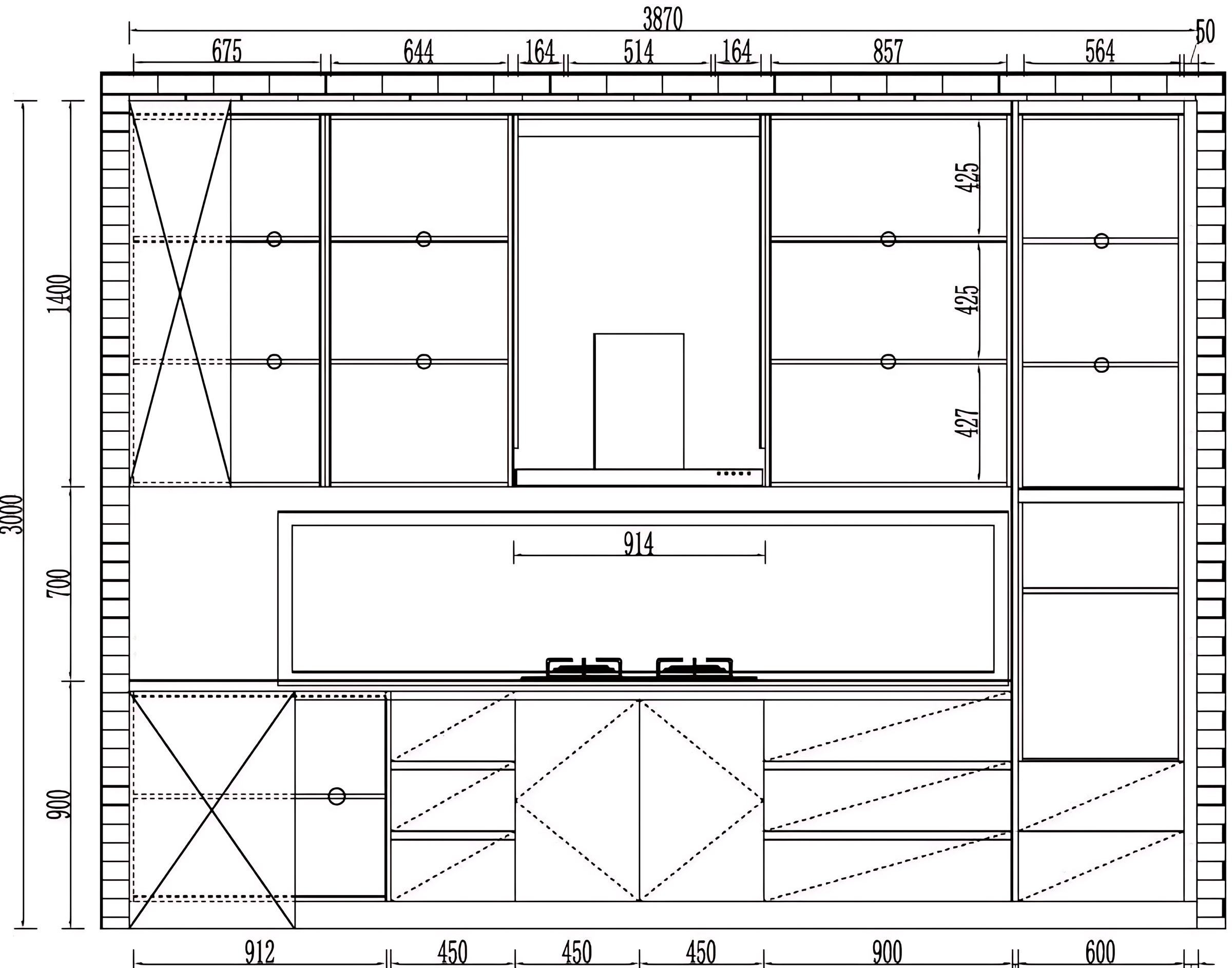
Pipes along the skirting, a meter in the alcove, a boiler in the corner of the kitchen. Most rooms have something that has to stay put, and made-to-measure furniture can work around it rather than over it.
Pipes
Back panels can be notched, or set forward to leave a service void, so pipes run behind the furniture without being squashed. Tell us whether they run along the wall or come up through the floor.
Boilers and meters
Given the space their makers specify, behind doors that open fully for servicing and meter readings. Any gas work is for a Gas Safe registered engineer.
Existing boxing-in
If pipes are already boxed in, measure the box as it is. We'll scribe to it, or if it's in the way, give your builder the size it needs to come down to.
Who does what, and when
We design and supply the furniture. The services are for qualified trades, and the order matters.
We mark it all up
Sockets, switches, LED positions, radiators and pipes are shown on your drawings.
Electrician: first fix
Moves or adds sockets and runs cables for lighting before the furniture arrives.
Plumber or engineer
Moves radiators or pipes if needed. Anything gas is done by a Gas Safe registered engineer.
Furniture fitted
Our fitter, your joiner or you put it in place, with tall pieces fixed back to the wall.
Electrician: second fix
Connects the LED lighting and fits socket faceplates through the cut-outs.
Photograph the wall, obstacles and all
Show us the window, the radiator and every socket. We'll design around the lot, and the design and price range cost nothing.
Free guide
Get the free planning guide
Measuring, styles, finishes and how to plan your budget, in one short guide. Then the odd email with ideas worth stealing.
Questions people ask
Anything else, send us a message and we'll talk it through.
Can I put a wardrobe in front of a radiator?
We don't recommend it. A radiator behind a wardrobe warms the inside of the wardrobe, not the room. Move the radiator, or plan the wardrobe either side of it.
Can a window seat go over a radiator?
It can, with a vented front and an open or slotted top so heat still reaches the room. Expect less warmth than from an open radiator. Many people move the radiator instead. See window seats.
Do you move sockets?
No. We mark where they should go on the drawings, and a qualified electrician does the work.
What if the window reveal or sill isn't straight?
Common in older houses. We measure in several places and scribe the panels to fit. Uneven walls explains how.
Can units go around a boiler?
Yes, with the clearances the boiler manufacturer asks for and room for servicing. If the boiler or gas pipework needs changing, that's for a Gas Safe registered engineer.